How to Prevent Seasickness on a Sailing Holiday | FleetoHub
Fleetohub Editorial Team·
How to Prevent Seasickness on a Sailing Holiday
Worried you'll spend your sailing holiday feeling green? You're in good company. Seasickness is one of the most common worries first-timers have, and it's a fair one.
Here's the reassuring part. Seasickness is very manageable, and most of the fix happens before you leave the marina. A little preparation, well-timed remedies, and a few simple habits on board make a real difference.
This guide gives you a plain-English plan. You'll learn what to do the day before, when to take tablets, where to sit, and what to do if it starts anyway. Still deciding whether a charter is for you? Our guide to what to expect on your first sailing holiday covers the full picture.
Key Takeaways
Habituation (your body adapting to repeated motion) is the most effective fix, ahead of any drug, according to the CDC's 2026 Yellow Book
Take remedies before you sail: tablets need roughly 30 minutes to 4 hours, the patch 6-12 hours
Sit midships, watch the horizon, skip screens, and ask to steer
Avoid alcohol and a short night's sleep beforehand
Why Do Some People Get Seasick and Others Don't?
Genes play a bigger role than willpower. In 2026, the CDC Yellow Book reported that heritability explains 55-70% of the variation in motion-sickness susceptibility, based on twin studies (CDC, Motion Sickness, Yellow Book 2026, retrieved October 2026). If seasickness runs in your family, plan for it. If it doesn't, you still aren't immune.
Here's what's happening inside your body. Motion sickness comes from a mismatch between your inner ear and your eyes (, last reviewed June 2023). Your inner ear feels the boat rise and fall. Down in the cabin, your eyes see a wall that isn't moving. Your brain gets two conflicting reports and answers with nausea.
Age and health play a part too. Children under 2 rarely get motion sickness, susceptibility peaks between ages 7 and 12, and it then declines through adulthood (CDC Yellow Book, 2026). People with a history of migraine, vertigo, or balance problems are more prone.
Almost anyone with a working inner ear can get motion sickness if the motion is strong enough, according to the CDC's 2026 Yellow Book. The most effective protection is habituation: your brain adapting after repeated exposure. The CDC rates it above any current drug. It can be slow to build, so ease in gently.
What Should You Do the Day Before You Sail?
Your best prevention starts the night before. The CDC's 2026 Yellow Book notes that sleep deprivation can worsen motion sickness, and that alcohol and nicotine make it more likely (CDC Yellow Book, 2026). So sleep properly, skip the big farewell drinks, and start your first sailing day rested.
A short checklist for the day before:
Sleep. Aim for an early night, especially after a long travel day to reach the marina.
Skip alcohol. The NHS also advises against alcohol shortly before or during travel.
Eat light. Avoid heavy, greasy, or spicy meals the evening before and on sailing mornings.
Do a trial run. Side effects differ between people, so the CDC suggests trying a remedy before you travel (CDC Yellow Book, 2026). Don't test a new tablet for the first time on the boat.
Tell your skipper. If you're prone to seasickness, say so at the briefing. A good skipper will plan around it.
Ask your skipper to keep the first leg short. A one- or two-hour hop to a sheltered bay lets your body start adapting before any longer passage. That's our reasoning from the CDC's habituation findings, not a quoted study, but it's a simple request that costs nothing.
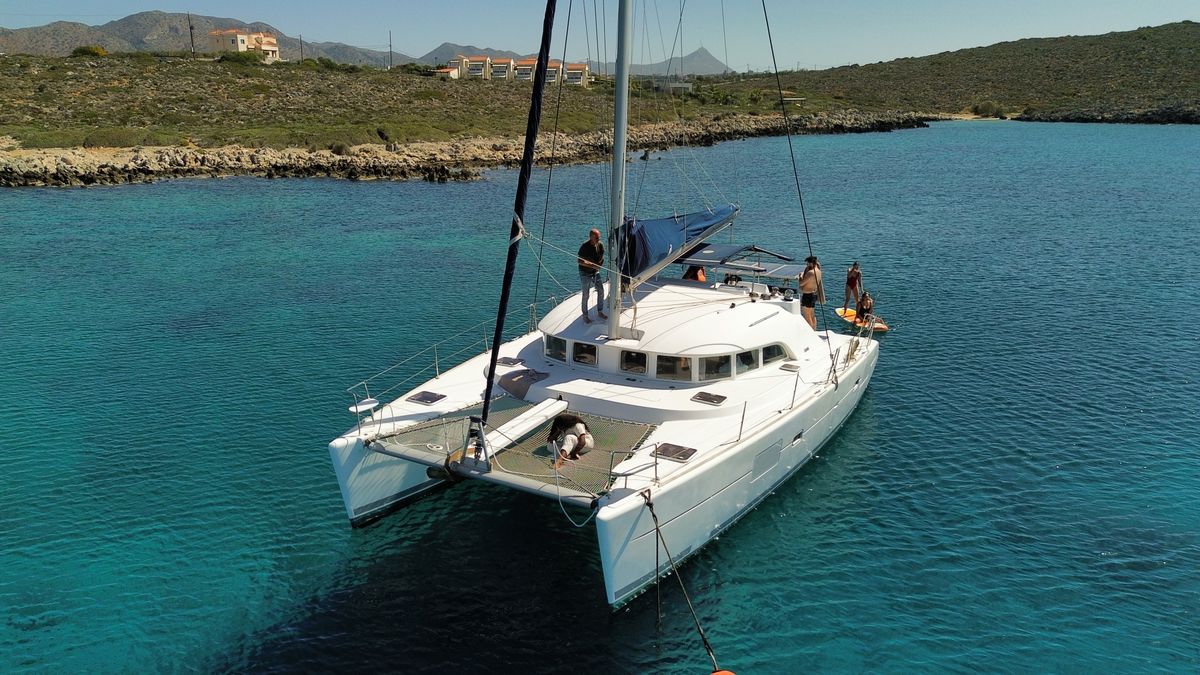
Your choice of boat and route can help as well. Catamarans (twin-hulled boats) lean over far less than single-hulled sailboats, and many first-timers find them steadier. Leaning is called heeling. Calmer cruising areas help even more. Summer winds in the open Aegean can make for bumpy passages, so read our Greece season guide before you pick dates. None of this is a guarantee, but it stacks the odds in your favour.
Medication works best before the motion starts. In 2026, the CDC Yellow Book advised taking anti-motion-sickness drugs before exposure, not after symptoms begin. Early symptoms can slow the stomach and block absorption (CDC Yellow Book, 2026). Timing matters as much as which remedy you choose.
Different remedies take different lengths of time to kick in. This chart shows how far ahead of sailing each common option should be taken, using the CDC's adult figures.
How long before sailing each common seasickness remedy needs to be taken. Hyoscine is also called scopolamine; some patch brands take up to 12 hours. The NHS tells adults to take cinnarizine about 2 hours before travel, so follow the packet if it differs. Source: CDC Yellow Book, 2026.
Most tablets wear off within a working day. The patch is the exception, which is why it suits longer passages.
How long the effect of each remedy lasts, in hours. Source: CDC Yellow Book, 2026.
Which one should you choose? For a day of six hours or less in mild to moderate conditions, the CDC suggests meclizine or dimenhydrinate. For longer exposure in moderate to intense conditions, it suggests a scopolamine patch (CDC Yellow Book, 2026). Scopolamine is called hyoscine in the UK. The NHS adds that pharmacies sell dissolvable tablets for children, and patches for adults and children over 10. For cinnarizine, the NHS tells adults to take it about 2 hours before travelling.
A few things worth knowing before you buy:
Drowsiness is the most common side effect. Dry mouth and dry eyes are more common with scopolamine. If you feel sleepy, don't take the helm.
Scopolamine isn't for everyone. The CDC says it shouldn't be used by people with glaucoma or a risk of urinary retention from prostate problems. The NHS hyoscine page adds epilepsy, heart problems, and being aged 60 or older to its list of reasons it may not suit you.
Never cut a patch in half. Cutting disrupts how the medicine is released.
Allergy tablets don't count. Newer non-drowsy antihistamines such as cetirizine and loratadine aren't effective for motion sickness.
Brand names and availability vary by country, and some of these are prescription-only in places. Ask a pharmacist which option suits you. This article is general information, not medical advice.
How Do You Stay Comfortable While You're Sailing?
Small habits do a lot of work on the water. In 2026, the CDC Yellow Book found controlled breathing around half as effective as anti-motion-sickness drugs in laboratory trials, with no side effects (CDC Yellow Book, 2026). It also backs using a horizon reference, avoiding reading, and avoiding the bow.
Here's your on-board routine:
Stay on deck, in fresh air. Fresh air on your face helps, and the NHS advises breathing it in where you can.
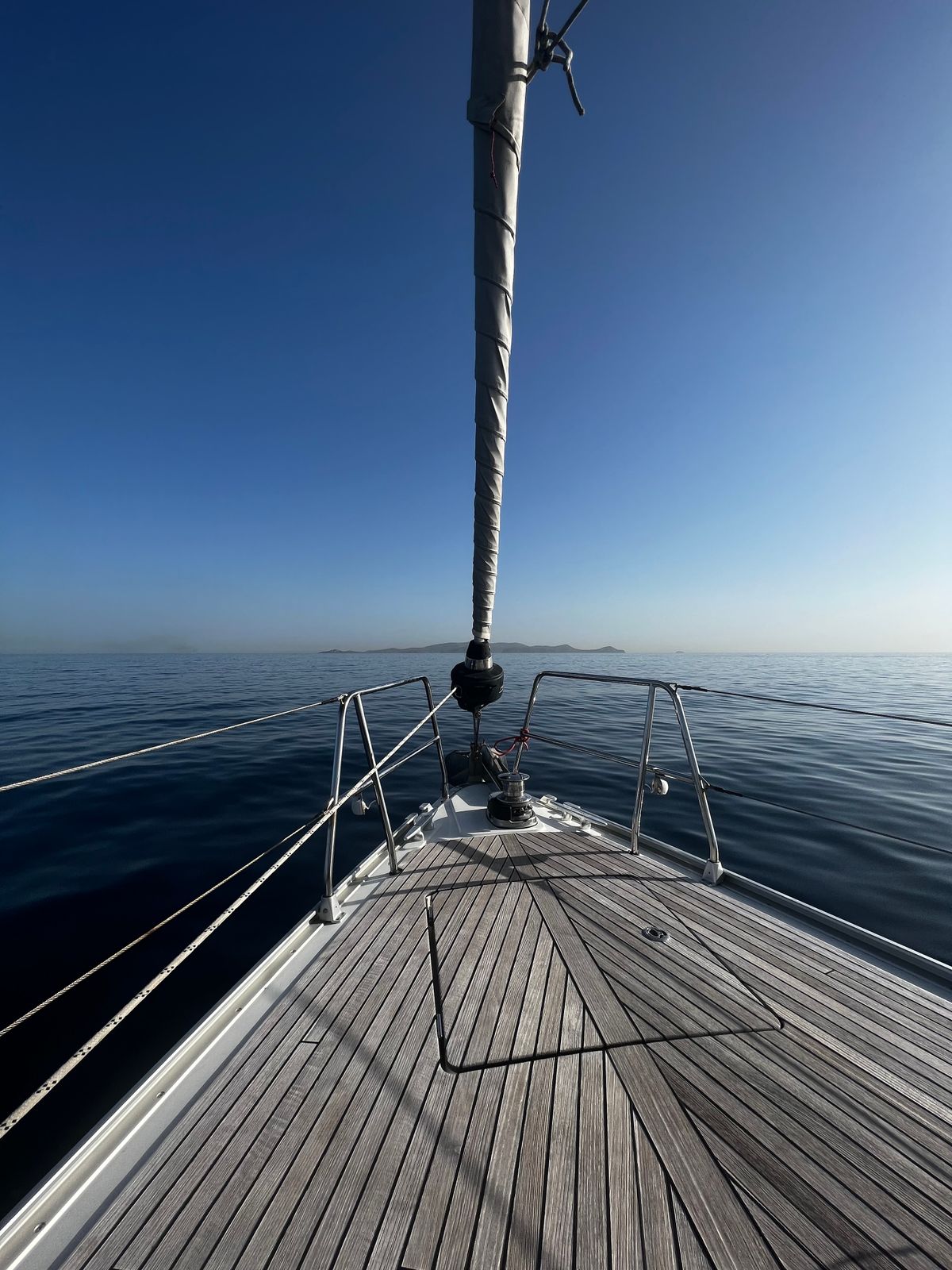
Sit in the middle of the boat. The NHS recommends the middle of a boat to reduce motion. The CDC says to avoid the bow, where movement is greatest.
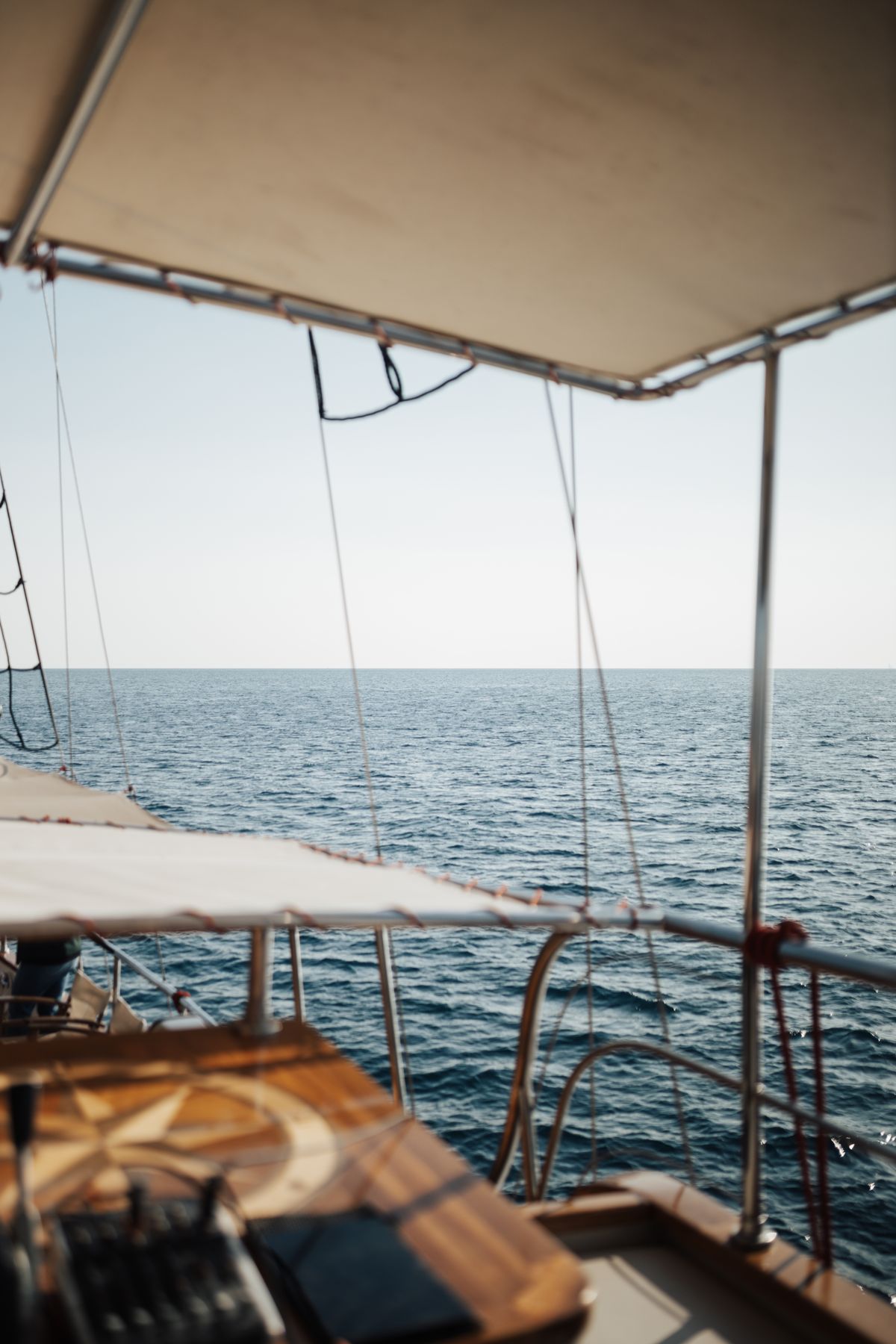
Look at the horizon. A fixed point lets your eyes agree with your inner ear. Don't stare at passing waves.
Skip screens and books. Reading and phones make the mismatch worse, according to the NHS.
Ask to steer. The CDC notes that being in control, or feeling in control, lowers motion sickness. Most skippers on a skippered charter are glad to hand over the wheel in easy conditions.
Breathe slowly. Match your normal resting pace and focus on it.
Eat little, drink often. Light snacks and water beat a big lunch. Ginger tea, biscuits, or tablets are a popular extra, and the NHS suggests them.
One tip that rarely makes the lists: do your cabin chores in port. Hunting for a swimsuit in a cabin, with no horizon and your head bobbing, is exactly the situation the CDC describes as a trigger. Pack what you need for the day in a small bag, and keep it with you in the cockpit.
If you need to rest, lie flat. The CDC says lying down may help by reducing head movements, so a midships berth beats sitting upright in the cabin.
What Should You Do If You Start Feeling Sick?
Act at the first warning sign, not the first wave of nausea. In 2026, the CDC Yellow Book described symptoms building gradually: stomach awareness, warmth, yawning, sweating, and dizziness, then nausea, and finally vomiting (CDC Yellow Book, 2026). That slow build is your window to step in.
If you feel clammy, yawn a lot, or just feel "off", do this straight away:
Tell the skipper. They can ease the motion by changing course or heading for a sheltered bay. They'd much rather know early.
Get to the cockpit. Sit midships, in the open air, with your eyes on the horizon.
Sip water and nibble something dry. Skip anything rich or spicy.
Keep your eyes up. Avoid your phone and the waves.
Take the helm if you can. Having a job helps, as long as you aren't drowsy from medication.
If you do need to be sick, tell someone first. Ask the skipper which side to use (usually the downwind side), keep a hand on the boat, and stay inside the guardrails. Wear a life jacket if you're leaning anywhere near the edge.
If you're being sick repeatedly, replace fluids. The CDC stresses adequate fluid and electrolyte intake when someone is vomiting. If you can't keep water down, or you feel faint, tell the skipper so they can get help.
Here's one more reassurance. Once you're back on land, a rocking sensation is normal. The CDC says this transient feeling rarely involves nausea and typically resolves within hours (CDC Yellow Book, 2026). Your brain is simply adjusting back.
Frequently Asked Questions
Does ginger really help with seasickness?
The NHS suggests trying ginger as a tablet, biscuit, or tea. The CDC's 2026 Yellow Book is more cautious, describing the evidence for ginger and other supplements as weak and contradictory. Treat ginger as a pleasant extra rather than your main plan on a six-hour sailing day.
Are acupressure wristbands worth buying?
The NHS says acupressure bands don't work for everyone. In laboratory trials summarised by the CDC's 2026 Yellow Book, they were no more effective than a placebo, though placebo effects can be strong. If you find one helps, there's little harm in using it, but pair it with proven steps like timing and a horizon view.
Can children take seasickness medicine on a sailing holiday?
Try behavioural steps first. The CDC says susceptibility peaks between ages 7 and 12 and that medication for children needs caution. It advises avoiding scopolamine, including patches, in children, while the NHS lists patches for over-10s. Because the advice differs, ask a pharmacist or doctor before you go.
How long before sailing should I take seasickness tablets?
It depends on the remedy. Per the CDC's 2026 table, hyoscine tablets take 30-60 minutes, dimenhydrinate about 2 hours, and a hyoscine patch 6-8 hours (up to 12 for some brands). The NHS tells adults to take cinnarizine 2 hours before travel. Always follow the packet and count back from departure.
Will I definitely get seasick on a sailing holiday?
No. Susceptibility varies widely, and heritability accounts for 55-70% of that variation, according to the CDC's 2026 Yellow Book. Calm seas, fresh air, and a horizon view all lower your odds. If you do feel queasy, habituation means it usually eases with continued exposure to the motion.
You Can Sail Without the Sick Feeling
Seasickness isn't a reason to skip a sailing holiday. It's a problem with a plan, and most of the plan is simple.
The short version:
Sleep well, skip alcohol, and eat light the day before
Take remedies ahead of time, using the timings above, and check with a pharmacist
Sit midships, watch the horizon, skip screens, and ask to steer
Spot the early signs, tell your skipper, and act fast
Ready to plan your first charter? Browse skippered sailing holidays on Fleetohub and filter by destination, boat type, and group size.
Information in this article is accurate as of October 2026; verify with the operator before booking. This article is general information and not medical advice. Remedies, brand names, and availability vary by country, so ask a pharmacist or doctor about what suits you and your family.