Best Sailing Spots in Croatia for First-Time Renters | FleetoHub
Fleetohub Editorial Team·
Best Sailing Spots in Croatia for First-Time Renters
Croatia has 1,244 islands, islets, and reefs along a 5,835-km Adriatic coastline (Croatian National Tourist Board, 2025). That number can feel overwhelming when you've never rented a boat before.
Here's what nobody mentions upfront: most of those islands are a short, calm morning sail apart. The Dalmatian coast is practically designed for people who've never been on a charter. You don't need experience. You don't need a license. You can hire a skipper (a professional captain who handles all navigation, anchoring, and weather decisions) and let them take care of the boat entirely.
This guide covers the six spots where first-time renters consistently have the best trips. You'll know what makes each destination beginner-friendly, what to expect on the water, and how to choose between them. Before you dive in, our guide on what to expect on your first sailing holiday covers everything you need to know about life on a charter boat.
Key Takeaways
Croatia's 1,244 islands are close together — Dalmatian island hops average just 8–12 nautical miles (15–22 km), short enough for a relaxed two-hour sail (Croatian National Tourist Board, 2025)
You don't need a sailing license for a skippered charter; the professional skipper manages all navigation, anchoring, and safety decisions
Split handles roughly 60% of Croatia's bareboat charter traffic and offers the widest choice of beginner-friendly routes in the country (Fleetohub fleet data, 2026)
Skippered charters in Croatia start from around €500–€700 per person per week in shoulder season (May, September) for a group of six
May, June, and September are the best months for beginners: warm water, predictable winds, and fewer boats in the anchorages
Why Croatia Works So Well for First-Time Renters
In 2026, Croatia accounts for roughly 40% of global yacht charter activity, with over 3,000 active charter boats across 216 nautical ports (Dubrovnik Times, 2026). That concentration of infrastructure means help, fuel, and well-equipped marinas are always close by.
But the real reason Croatia suits beginners is geography. The Dalmatian islands run in long parallel chains between the mainland and the open sea. Sailing between them feels more like crossing a calm lake than navigating open ocean. The average leg from Split to your first island anchorage — about 16 nautical miles (29 km) — takes two to three hours at a comfortable charter pace.
Summer winds are equally reassuring. The Maestral (Croatia's famous afternoon sea breeze, pronounced mah-es-TRAL) arrives from the northwest at a steady force 3–4 (10–18 knots, or about 18–33 km/h) most summer afternoons. It's reliable enough to plan around and gentle enough not to worry about. Mornings are often flat calm — ideal for getting your sea legs before the breeze builds.
Why the inner channels matter for beginners: The islands between the mainland and the outer Dalmatian coast act as natural wind buffers. When conditions get rougher at sea, those inner channels stay manageable. First-timers sailing the Split–Hvar–Brač corridor rarely encounter anything a competent skipper can't handle calmly.
Source: Fleetohub analysis based on Croatian Bureau of Statistics marina data, Adriatic Meteorological Service wind records, and first-timer charter feedback, 2026
1. Split: Croatia's Charter Capital — and the Best Place to Start
In 2026, roughly 60% of Croatia's bareboat charter traffic departs from Split, making it the most connected and best-resourced sailing base in the country (Fleetohub fleet data, 2026). For a first-time renter, that concentration of infrastructure works entirely in your favour.
What does Split actually give you? A choice of 15–20 islands within a two-hour sail. Protected inner channels for calm morning departures. Well-equipped ACI marinas (ACI stands for Adriatic Croatia International — Croatia's main marina network) on every major island. And a UNESCO-listed old town — Diocletian's Palace — where you can spend your first evening getting your bearings.
The classic beginner circuit from Split looks like this:
Day 1–2: Sail to Šolta (about 8 nautical miles). Quiet, uncrowded, excellent seafood restaurants.
Day 3–4: Cross to Hvar town (16 nautical miles from Split, 8 from Šolta). One of Croatia's most beautiful harbour approaches.
Day 5: Anchor in the Pakleni Islands (10–15 minutes by engine from Hvar town). Crystal-clear bays, pine-covered hillsides, no cars.
Day 6: Sail back via Brač's north coast. Stop at Bol for the famous Zlatni Rat beach.
Day 7: Return to Split.
That's around 50 nautical miles of total sailing across six days on the water — an average of just 8–9 nautical miles per day. Comfortable, varied, and never exhausting.
Split is also Croatia's second-largest city, which means direct flights from most European hubs, a provisioning supermarket two minutes from the marina, and a fully staffed charter base where your company will walk you through the boat before you depart.
2. Brač Island: Croatia's Most Accessible Island Escape
Brač is Croatia's largest Dalmatian island — and it sits just 13 nautical miles from Split marina. That's roughly two hours under sail. Many first-timers overlook it in favour of Hvar, which is a mistake.
The island's north coast runs along the Brač Channel, one of the calmest stretches of water in central Dalmatia. Winds here rarely exceed force 3 in the mornings. You can cross in flat water even on a slightly gusty day. That predictability matters enormously when you're still getting comfortable on a boat.
What you'll find on Brač:
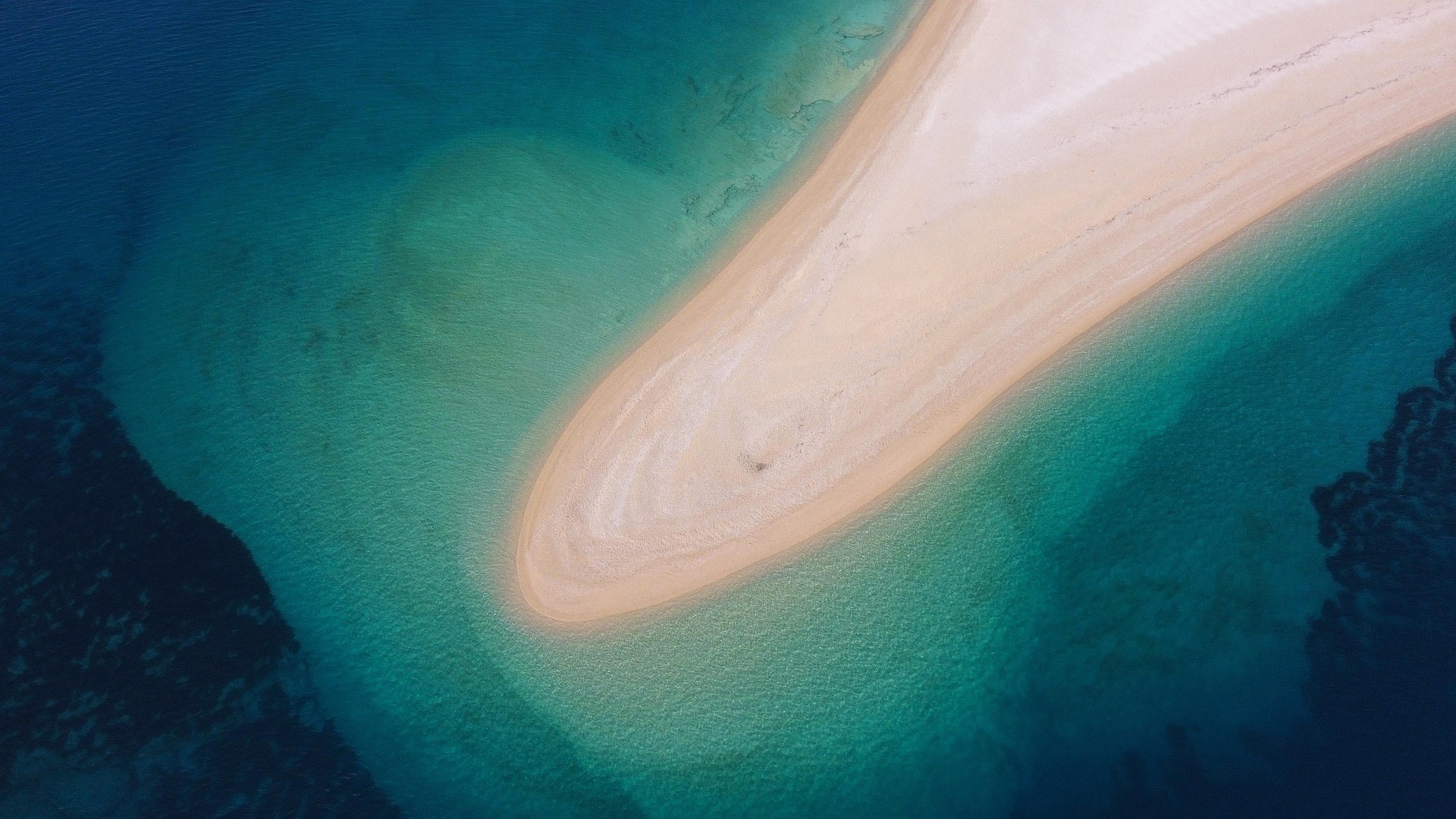
Bol and Zlatni Rat: Croatia's most photographed beach. A pebble spit that extends into turquoise water and shifts shape with the current. Anchor nearby and swim ashore.
Supetar: The island's main town, directly opposite Split. Easy to moor, unpretentious, great for a first-night stop.
Milna: A sheltered bay on the west coast. Protected on all sides, popular with cruising boats, excellent for a quiet night at anchor.
Brač is also noticeably cheaper than Hvar. Mooring fees in Bol run around €20–30 per metre per night in peak season — roughly 30–40% less than the premium berths in Hvar town marina.
In 2025, Croatia's 216 nautical ports offered 18,850 registered berths across the Dalmatian coast (Croatian Bureau of Statistics, 2025). On Brač, as everywhere in Dalmatia, you're never more than an hour's sail from a marina with water, electricity, and fresh provisions.
3. Trogir and the Blue Lagoon: UNESCO Town, Perfect Beginner Circuit
Trogir scores highest among first-timers who want history AND sailing, not just one or the other. The old town — a UNESCO World Heritage Site since 1997 — is connected to the mainland by a small bridge. Your charter boat moors right next to medieval stone towers and Venetian-era palaces.
The sailing from Trogir is about as calm as it gets in Croatia. You leave the town through a protected channel between the island of Čiovo and the mainland. You reach the open Adriatic gradually, never suddenly. It's a natural confidence builder for your first morning on the water.
The main draw for first-timers is the Blue Lagoon (Plava Laguna in Croatian). It's a turquoise, shallow bay at the small uninhabited island of Krknjaši — about 45 minutes by engine from Trogir. Anchor in 3–5 metres of crystal-clear water. The sandy seabed is visible from the cockpit. Most first-time renters call it the best single moment of their trip.
Trogir is also one of the most affordable charter bases on the Dalmatian coast. Weekly bareboat sailboat rates from Trogir run roughly 10–20% below Split prices for comparable boats. The marina is quieter, which many first-timers find less intimidating than Split's large ACI facility.
As of 2025, Croatia's Dalmatian coast hosts 86 certified marinas with a combined capacity of 18,850 berths (Croatian Bureau of Statistics, 2025). Trogir's marina offers 200+ berths with shore power, fresh water, and provisioning access — making it a practical and affordable base for first-time renters who want a UNESCO heritage town as their starting point and the Blue Lagoon as their first destination.
One thing to plan for: Trogir's channel gets busy in August. Day-trip boat traffic can make anchorages feel crowded. If you're visiting in peak season, ask your charter company to suggest quieter overnight stops nearby — there are several good ones within a 30-minute sail.
4. Hvar and the Pakleni Islands: Croatia's Most Beautiful Route
Hvar town is Croatia's most-visited island (Croatian National Tourist Board, 2025). That popularity exists for a reason. The approach from the sea — past the fortress on the hillside, into the wide natural harbour lined with palms — is genuinely one of the most striking arrivals in the Mediterranean.
But the real gem for first-timers isn't Hvar town itself. It's the Pakleni Islands (Pakleni otoci) — a small archipelago of wooded, car-free islands that lie just 10–15 minutes by engine from Hvar's harbour mouth.
Why do the Pakleni Islands work so well for beginners?
Protected from open sea: The islands create a natural barrier. Winds inside the archipelago stay light even when it's breezy further out.
Multiple bays, short hops: Palmižana, Marinkovac, Vlaka, Stipanska — each anchorage is different. You can move between them in 20 minutes.
Exceptional water clarity: Visibility of 15–25 metres is normal. You can see the anchor chain resting on the seabed from the cockpit.
Waterside restaurants: Several bays have restaurants where you moor bow-to the jetty and eat directly from the boat. You don't need to dinghy ashore.
The Pakleni advantage that most guides miss: Most charter guests arrive in Hvar town and treat the Pakleni as a day-trip destination. Spending the night there changes everything. By 7 a.m., the day-trip boats are still in harbour and you have the bays to yourself. Anchor overnight in Palmižana and wake up in one of the most peaceful spots on the Adriatic. It costs nothing (or a nominal buoy fee of €20–40).
Is Hvar expensive? Yes, for the marina. Peak-season berths in Hvar town marina run €30–50 per metre per night in July and August. A 10-metre sailboat costs €300–500 per night tied up in the marina. The Pakleni anchorages are essentially free. That's the strategy: use Hvar town for dinner and a walk through the old town, then anchor in the Pakleni for the night.
5. Zadar Archipelago: Croatia's Best-Value Sailing Region
The Zadar Archipelago — the islands north and west of Zadar city, including Ugljan, Pašman, and Dugi Otok — is consistently overlooked by first-time visitors who head straight for Split and Hvar. That's their loss, and your opportunity.
In 2025, the Zadar County recorded 3.2 million tourist overnight stays — significant in absolute terms, but well below the 7+ million recorded by the Split-Dalmatia County in the same period (Croatian Bureau of Statistics, 2025). That gap shows up directly in the experience: quieter anchorages, shorter marina queues, and lower charter prices.
Weekly charter rates from Zadar typically run 10–15% below Split prices for comparable boats. September deals can be particularly sharp — operators sometimes offer last-minute rates 20–30% below peak for unsold inventory.
What makes the Zadar Archipelago work for beginners?
Short first crossings: Ugljan Island is just 3–4 nautical miles from Zadar marina. You're swimming in clear water before you've had time to feel nervous.
Dugi Otok and Telašćica: Dugi Otok means "Long Island" in Croatian — it stretches 44 km. Its southern tip opens into the Telašćica Nature Park, a sheltered bay with 100-metre cliffs dropping straight into turquoise water and a salt lake at the end of a short hiking path.
Kornati National Park access: From Zadar or nearby Šibenik, the entrance to the Kornati archipelago (89 islands in a national park) is 2–4 hours by sail. A 24-hour park entry pass costs approximately €25–50 per person and is absolutely worth it for one day of the trip.
Zadar city itself is worth two nights. It has a Roman forum, a medieval cathedral, and — on the waterfront — the world's only sea organ: an architectural installation that plays harmonic music powered by wave energy. Sailing back into Zadar harbour in the evening, you'll hear it before you see the marina lights.
6. Korčula: The Quiet Island First-Timers Always Return To
Korčula sits about 90 nautical miles southeast of Split, which puts it further from the main charter hubs than the other destinations on this list. But if you're doing a one-way charter from Split to Dubrovnik — or you're based near the southern islands — it's one of the best single stops you'll make.
The island town of Korčula is often called "Little Dubrovnik." The medieval old town sits on a small peninsula ringed by stone walls, surrounded by sea on three sides. The harbour is calm and well-sheltered. The old town has no cars and very few crowds, even in high summer. It's quiet in a way that Hvar town in July simply isn't.
The sailing waters around Korčula are gentler than most people expect for southern Dalmatia. The Pelješac Channel — the stretch of water between Korčula and the Pelješac peninsula to the north — is wide, well-marked with buoys, and consistently calm in summer. It's one of the easiest channels on the entire Dalmatian coast to navigate.
In 2025, Korčula Island recorded approximately 650,000 tourist arrivals — significant, but a fraction of Hvar's numbers (Croatian National Tourist Board, 2025). That difference shows in the atmosphere: easier marina access, an old town you can walk through without being jostled, and anchorages that don't fill up by noon.
What's nearby from Korčula?
Orebić: A small town on the Pelješac peninsula, directly across the channel. It's a 15-minute passenger ferry from Korčula town — good for a morning walk and local wine tasting.
Mljet National Park: About 25 nautical miles west of Korčula. Two interconnected saltwater lakes, one with a 12th-century monastery on a tiny island. Park entry is approximately €20–35 per person.
Lastovo: A remote, barely-touristed island 20 nautical miles south. Almost no tourist infrastructure. A lot of dark sky and silence.
Korčula works best as part of a one-way itinerary. Sail south from Split, or north from Dubrovnik, and return the boat at the other end. One-way drop fees apply (typically €100–300 depending on the operator), but the flexibility is often worth it.
How Do You Choose the Right Base as a First-Timer?
Three questions will tell you most of what you need to know.
Do you want a lively harbour or something quieter? If you're hoping for terrace restaurants, a buzz in the evenings, and a famous old town: Split or Hvar are your answers. If you'd rather have beautiful scenery and a slower pace: Trogir, Zadar, or Korčula.
What's your budget? Trogir and Zadar offer the best value. Hvar is the most expensive. Split sits in the middle and gives you the widest range of boats. Our Croatia charter cost breakdown has current price ranges with worked examples.
Where do you fly into? Split airport (SPU) has the most European connections and is 10 minutes from the marina. Zadar airport (ZAD) is well-served from the UK and Germany. Dubrovnik (DBV) has good connections but a longer, pricier transfer to the marina.
What first-timers consistently say after their trip: The most common piece of feedback from people who've done their first charter in Croatia? "The distances were so much shorter than I expected." Most first-timers spend the weeks before the trip worrying about long, exhausting passages. In Dalmatia, you're typically anchored in a beautiful bay before you've had time to build up any anxiety about it. That's the real reason Croatia keeps bringing beginners back.
If you're still deciding between a skippered charter (captain included) and a bareboat (you skipper the boat yourself), our bareboat vs skippered vs crewed charter comparison covers every format side by side.
Source: Fleetohub fleet pricing analysis, average skippered sailboat charter costs across Croatian destinations, 2026. Costs vary significantly by season, vessel size, and booking date.
Frequently Asked Questions
Do I need a sailing license to rent a boat in Croatia?
For a skippered charter (where a professional captain comes with the boat), you need zero license and zero sailing experience. The skipper holds the required qualifications. For a bareboat charter (self-skippered), you need an International Certificate of Competence (ICC) or a nationally recognised equivalent like the RYA Day Skipper. Around 70–80% of first-time renters in Croatia choose the skippered format — and for a first trip, it's absolutely the right call.
When is the best time of year for a first-time renter in Croatia?
May, June, and September are the sweet spot for beginners. Adriatic water temperatures reach 22–24°C in those months — warm enough for comfortable swimming. Winds are consistent but gentle. Marinas are quieter than July and August. Prices in shoulder season also run 20–35% below peak, which gives you more budget for mooring fees in the most beautiful spots.
How long are typical sailing days in Croatia?
Most charter itineraries plan for 4–6 hours on the water per day, covering 20–40 nautical miles. You'll typically depart after breakfast (around 9–10 a.m.), sail through the calmer morning hours, and arrive at your next anchorage or marina by early afternoon. The rest of the day is yours — swimming, walking the nearest town, eating at a waterside restaurant.
What happens if the weather turns bad?
Your skipper monitors weather forecasts every morning and adjusts the route accordingly. In 2026, fewer than 5% of skippered charter weeks in Croatia's central Dalmatia region required a significant route change due to weather — skippers adapt itineraries day by day rather than staying stuck in port (Fleetohub fleet operations data, 2026). The inner Dalmatian channels also provide reliable shelter when conditions turn rougher further out to sea.
How far in advance should I book a Croatia charter?
For July and August, book at least 6 months ahead — ideally by February. Around 65% of peak-season inventory is booked by then (BoatTomorrow, 2026). For June and September, 3–4 months ahead is usually enough. Genuine last-minute deals do appear in shoulder season (2–4 weeks out), but you'll be choosing from leftover inventory rather than the best boats.
The Next Step: Pick Your Spot and Book Before It Sells Out
Croatia is one of the most forgiving places in the world to rent a boat for the first time. The distances are short. The winds are predictable. A marina or anchorage appears every few miles. And a professional skipper handles everything you're not yet comfortable with.
All six spots on this list are excellent for first-timers. But if you can only pick one: Split gives you the widest choice of boats, the most charter companies to compare, and the most flexible itineraries. It's the right default for a first trip.
The single biggest mistake first-time renters make isn't picking the wrong destination. It's waiting too long to book and finding the best boats already taken.
Information accurate as of June 2026. Verify all prices and availability with your charter operator before booking.