Rent a Boat in Greece: Your Complete Destination Guide | FleetoHub
Fleetohub Team··Updated 28 August 2026
Rent a Boat in Greece: Your Complete Destination Guide
Greece is the world's largest yacht charter market. In 2025, the country offered 3,030 active charter vessels — more than Croatia (2,531), Italy (1,282), France (970), and Turkey (578) combined — including a record 904 catamarans, the highest catamaran count of any charter destination on earth (GTP Headlines / Riginos Yachts, 2025).
That scale has a practical benefit for anyone planning a boat trip here. More boats means more competition on price. More bases means more departure points. More operators means more flexibility when the week you wanted is already gone.
Greece is also genuinely diverse. Five distinct sailing regions — each with different wind patterns, scenery, difficulty level, and price range — give you real choices about what kind of trip you want. This guide walks through all of them so you can pick the one that fits.
Key Takeaways
Greece leads the global charter market with 3,030 vessels, including 904 catamarans — the world's largest catamaran fleet (GTP Headlines, 2025).
Average charter spend in Greece stabilized around €5,500/week in 2025 (Booking Manager, 2025).
The Ionian Islands are the most beginner-friendly region — calm summer seas, light predictable winds, no Meltemi.
Greece charges 13% VAT on charter fees for domestic itineraries, rarely shown in headline prices. Budget for it.
Bareboat requires an ICC / RYA Day Skipper equivalent; without one, a skippered charter costs €180–€220/day extra.
Why Does Greece Lead the World in Yacht Charters?
In 2025, Greece confirmed its position as the world's leading yacht charter destination, operating the largest fleet across five distinct sailing regions and 13,000-plus kilometres of coastline. The fleet includes 904 catamarans — significantly ahead of Croatia's 501 and Italy's 438 in the same segment (GTP Headlines, 2025).
The depth of the fleet matters because it shapes the booking experience. Greece's consolidation means that 36% of the market is now controlled by fleets operating 50 or more yachts — large, professionally managed operations with maintenance infrastructure and digital booking systems (Booking Manager, 2025). That translates to more reliable boats, faster issue resolution, and consistent check-in standards.
The main charter hubs are Athens (Alimos and Lavrio marinas), Lefkada, Corfu, and Preveza in the Ionian, with growing demand from charterers based in Germany, France, and the Netherlands. Average weekly charter spend stabilized around €5,500 in 2025, down slightly from €6,000+ in prior seasons as the market corrected after pandemic-era pricing peaks.
In 2025, Greece operated 3,030 charter vessels — 1.2× the size of Croatia's fleet and more catamarans than any other country. Fleet consolidation is accelerating: 36% of the Greek market is controlled by operators with 50+ yachts, improving service consistency across the sector. Average charter spend for the 2025 season settled near €5,500/week. (GTP Headlines / Riginos Yachts, 2025; Booking Manager, 2025.)
Active charter fleet size by country, 2025. Greece leads with 3,030 vessels — more than Croatia and Italy combined. Source: Riginos Yachts / GTP Headlines, 2025.
Greece's 5 Sailing Regions: Which Is Right for You?
Choosing a region is the most important decision you'll make before you book. Each one has a distinct character — different wind, different scenery, and a different answer to the question of how much experience you need.
Ionian Islands — Best for First-Timers
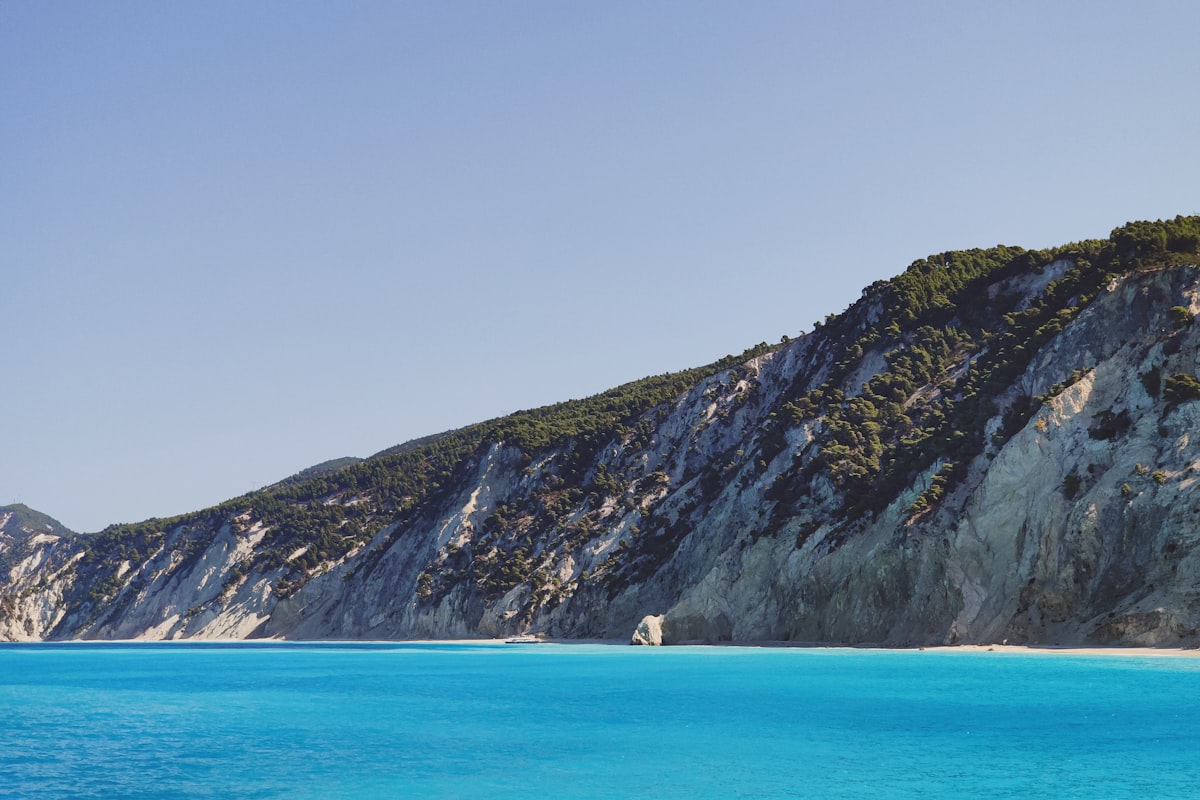
The Ionian is Greece's most forgiving sailing ground. Summer winds here are light and predictable: the Maestro, a moderate northwesterly, blows from May through September, rarely exceeding force 3–4. There's no Meltemi in the Ionian. Seas stay calm. Passages between major islands run 10–25 nautical miles — short enough to anchor before lunch.
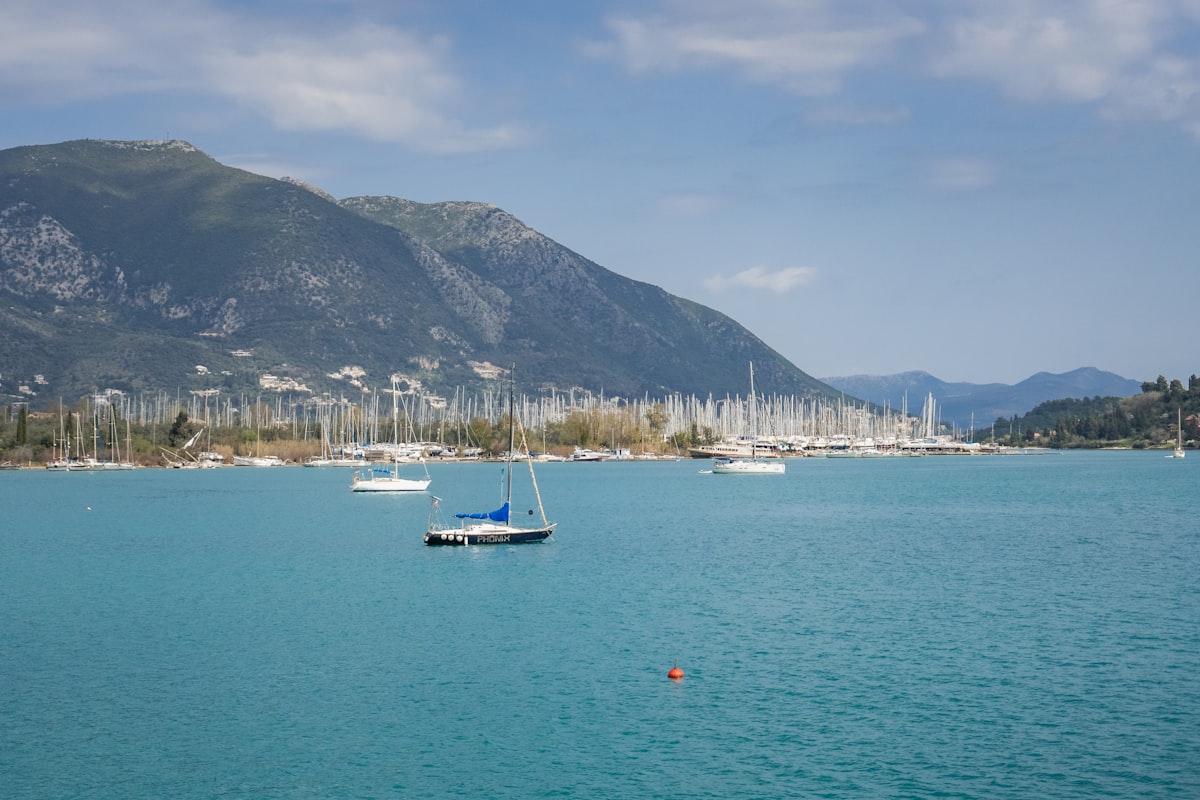
The region covers Corfu, Lefkada, Kefalonia, Ithaca, Paxos, and Zakynthos. Lefkada has the highest density of charter operators and is the most practical base for a week-long loop. From Lefkada, you can reach Meganisi, Kefalonia, Ithaca, Paxos, and Kalamos without a single passage over 30 miles.
Best for: First-timers, families, anyone without an ICC who wants a skippered charter, and anyone who prefers long calm days over dramatic sailing.
Cyclades — Best Scenery, Strongest Winds
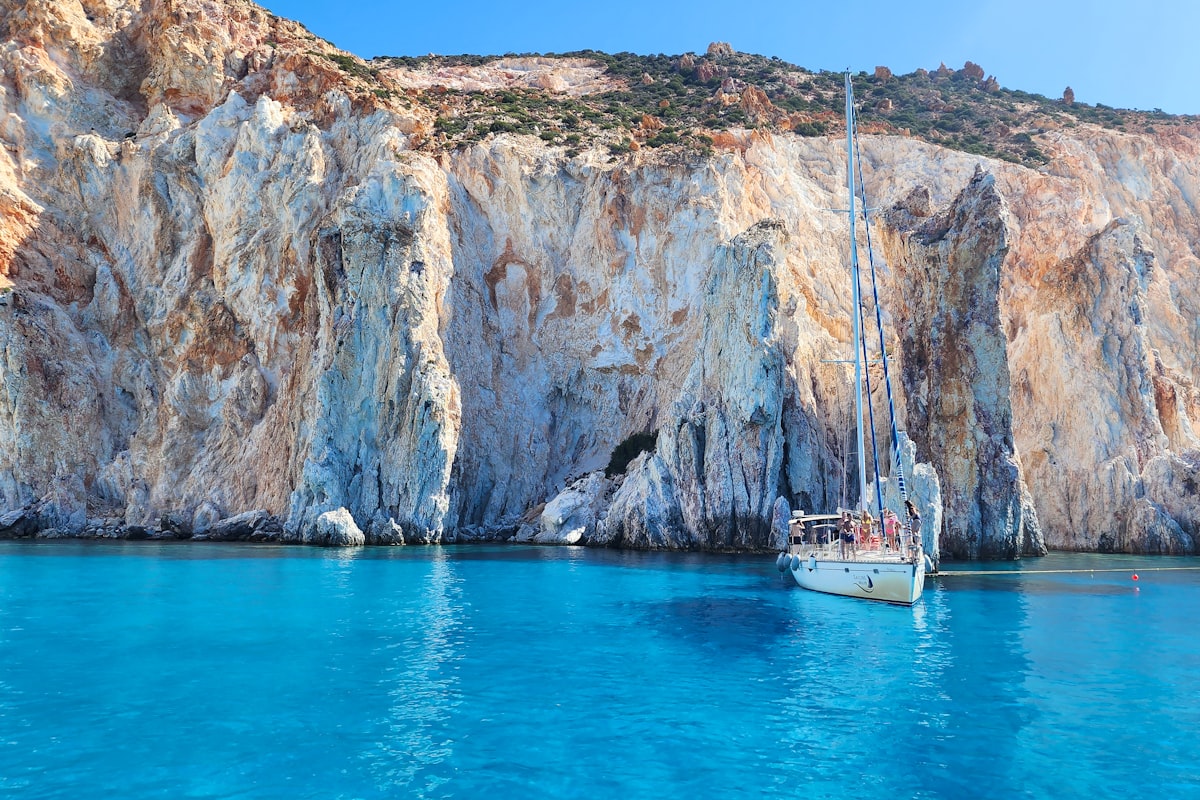
The Cyclades is what most people picture when they imagine Greece: volcanic silhouettes, whitewashed walls, blue-domed chapels on clifftops, water that looks painted on. Mykonos, Santorini, Paros, Naxos, Milos, and Ios sit in this cluster.
The trade-off is the Meltemi. This is a strong northeasterly wind that can blow force 5–6 across the Aegean from mid-July through August. It is reliable — experienced sailors actively seek it out — but it makes the Cyclades unsuitable for most first-timers in peak season. May, June, and September are the sweet spots: you get the scenery without the sustained heavy weather.
Best for: Sailors with experience, second-timers who want to graduate from the Ionian, anyone chasing the postcard shots of Santorini by water.
Saronic Gulf — Best for Short Trips and Day Sails
The Saronic Gulf sits 10 nautical miles from Athens. You can pick up a charter in Alimos Marina in the morning and anchor off the traffic-free car-free island of Hydra by early afternoon.
The sailing distances are short — Aegina, Hydra, Poros, and Spetses are all within a 3–6 hour sail from Athens. This makes the Saronic the most popular base for 3–4 day charters, which are growing rapidly: short-duration rentals surged across the Mediterranean in 2025 as travellers opted for flexible itineraries (Booking Manager, 2025).
Best for: City-breakers combining Athens with a few nights at sea, shorter charter windows (mid-week departures), and charterers who want easy return access to the airport.
Dodecanese — Best Diversity and Longest Season
The Dodecanese stretches from Kos and Rhodes in the south to Patmos and Samos in the north. The islands here are drier, more spread out, and more culturally diverse than the Ionian — Turkish influence, Byzantine fortresses, medieval old towns, and dramatic volcanic ridgelines.
The sailing season here runs April through November. Rhodes and Kos benefit from warm spring and autumn conditions, extending the usable window further than any other Greek region. Summer winds in the Dodecanese are moderate — stronger than the Ionian but more manageable than the Cyclades.
Best for: Experienced sailors wanting variety, autumn and spring charters outside the peak window, and those interested in history and culture alongside sailing.
Sporades — Best for Quiet and Nature
The Sporades — Skiathos, Skopelos, Alonissos, and Skyros — sit northeast of the mainland and are the greenest islands in Greece. Dense pine forests run down to the sea. The National Marine Park of Alonissos is one of the most carefully protected marine environments in Europe, home to monk seals and dolphins.
Winds here are lighter in summer and the region sees fewer charter tourists than the Ionian or Cyclades. Skiathos has an airport. Most itineraries can be done on a simple loop from Skiathos in 7 days.
Best for: Nature lovers, repeat visitors who have done the Ionian, and quieter alternatives to the Cyclades crowds.
Which Port Should You Depart From in Greece?
Your departure port determines your sailing territory. Pick the wrong base and you'll spend half your week beating upwind to the islands you actually wanted to visit.
Port
Region
Best For
Key Islands Accessible
Athens (Alimos)
Saronic / Cyclades
Short trips, city + sail combos
Aegina, Hydra, Poros, Spetses, Mykonos
Lavrion
Cyclades
Cyclades circuit
Kea, Kythnos, Syros, Mykonos
Lefkada
Ionian
First-timers, families, week loops
Meganisi, Kefalonia, Ithaca, Paxos
Corfu
Northern Ionian
Relaxed north Ionian cruising
Paxos, Anti-Paxos, Epirus mainland
Preveza
South Ionian
Southern Ionian circuits
Lefkada, Meganisi, Kefalonia
Kos
Dodecanese
Eastern islands, long season
Nisyros, Symi, Rhodes, Patmos
Skiathos
Sporades
Nature and quiet
Skopelos, Alonissos, Skyros
Athens is the largest single charter hub in Greece. Alimos Marina — 7 km from Athens city centre — holds the highest concentration of charter companies in the country. Lavrion, 50 km southeast of Athens, is the second major Athens-area base and the preferred departure point for Cyclades circuits since it sits directly downwind of Kea and Kythnos.
Lefkada is the definitive Ionian gateway. It connects to the mainland by a road bridge, which makes logistics easy: you can drive or fly to Preveza Airport, rent a car for provisioning, and be on the water the same day.
Athens (Alimos and Lavrio) and the Ionian (Lefkada, Corfu, Preveza) are Greece's two highest-demand charter hubs, attracting the majority of European charterers. Germany, France, and the Netherlands are the three largest source markets. (GTP Headlines, 2025.)
What Types of Boats Can You Rent in Greece?
Greece's 3,030-boat fleet covers every type of charter vessel, from compact day-sailers to 18-metre luxury gulets.
Boat Type
Capacity
Weekly Cost (Low–High Season)
Best For
Bareboat sailboat (monohull)
4–8 guests
€1,300–€6,000
Qualified sailors, budget-conscious
Catamaran (bareboat)
6–12 guests
€2,400–€22,000+
Families, groups, comfort seekers
Skippered monohull
4–8 guests
€2,800–€7,500 incl. skipper
First-timers, no licence needed
Motor yacht
2–8 guests
€3,000–€20,000+
Island-hopping at speed, day trips
Gulet (crewed)
6–12 guests
€5,000–€25,000+
All-inclusive relaxation, large groups
The Lagoon 42 is now Greece's most-booked catamaran. In 2025, the Lagoon 42 led Greek catamaran bookings, followed by the Lagoon 46. On the monohull side, the Bavaria Cruiser 46 remained the single most popular yacht for the third consecutive year, trailed by the Beneteau Oceanis 46.1 and Oceanis 51.1 (Booking Manager, 2025). If those specific models are available on your preferred dates, they're proven performers with good parts availability across Greek marinas.
Catamarans represent 26% of the global charter fleet and are booked disproportionately in Greece, partly because of the high catamaran count and partly because families traveling with children find the twin-hull stability worth the premium (Booking Manager, 2025). One nuance from 2025: at peak season, monohull occupancy slightly exceeded catamaran occupancy for the first time in several years — higher catamaran prices and rising marina fees appear to be capping demand in the mid-budget segment.
The right timing depends on which region you've chosen — and how much wind you want.
Period
Ionian
Cyclades / Aegean
Saronic
Dodecanese
Water Temp
Apr–May
✅ Ideal
✅ Good
✅ Ideal
✅ Ideal
19–21°C
Jun
✅ Excellent
✅ Good
✅ Excellent
✅ Excellent
22–24°C
Jul–Aug
✅ Good
⚠️ Meltemi
✅ Good
✅ Good
26–28°C
Sep
✅ Excellent
✅ Best month
✅ Excellent
✅ Excellent
25–27°C
Oct
✅ Good
✅ Good
✅ Good
✅ Good
22–24°C
The Meltemi: What It Is and Where It Matters
The Meltemi is a seasonal wind system unique to the Aegean. It blows from the northeast, typically force 4–6, from mid-July through August. In the Cyclades, it arrives reliably by early afternoon and can hold for three to four days at a stretch.
Experienced sailors actively plan around it. The Meltemi makes for fast, exhilarating downwind passages — but it also makes certain anchorages completely untenable and can delay ferry services. If you're a first-timer and your dates fall in July or August, the Ionian or Saronic Gulf are the smarter choices.
What the Meltemi looks like in practice: On a typical Cyclades circuit in August, you'll often sail north in the mornings (before the afternoon wind builds), anchor by 2 PM, and wait out the 25-knot gusts that arrive like clockwork by 3 PM. In September, those same channels are flat calm by mid-morning. The difference in experience is significant.
September is the single best month for most sailors in Greece. The Meltemi has largely dissipated. Water temperatures remain at 25–27°C — warmer than the Ionian gets in June. Crowds thin noticeably. Charter prices are 15–25% below July–August peaks.
Indicative mid-season bareboat rates for a 38–42ft monohull by Greek departure region, June 2025. All prices exclude 13% VAT. Source: Kavas Yachting; Nautilia Yachting; Sail Ionian, 2025.
In 2025, the July–August peak in the Mediterranean continued to flatten. Charterers in Greece and across the Mediterranean increasingly favoured May–June and September–October, driven by lower prices, milder conditions, and more flexible planning habits. For Aegean sailing, September offers the most favourable balance of settled conditions and warm water after the Meltemi season ends. (Booking Manager, 2025.)
Do You Need a License to Rent a Boat in Greece?
For a bareboat charter, Greece requires a recognised sailing licence equivalent to RYA Day Skipper or higher — typically an ICC (International Certificate of Competence), ASA certification (US), or a national boating certificate from your country (Nautilia Yachting, 2025). Most operators also require a second crew member with basic sailing experience, confirmed with a declaration of competence.
If you don't hold a qualifying certificate, you hire a professional skipper. Skippered charters in Greece cost €180–€220/day (approximately €1,260–€1,540/week extra, before the mandatory 13% VAT applied to the skipper fee as well).
Qualification
Required For
Notes
ICC or equivalent
Bareboat charter
Any ISAF-recognised national certificate qualifies
RYA Day Skipper (UK)
Bareboat charter
Most widely held European qualification
ASA 101 + 103/104 (US)
Bareboat charter
Confirm acceptance with operator before booking
VHF Radio Operator Licence
All motorized vessels
Required alongside sailing licence
No licence required
Skippered/crewed charter
Guests need no qualifications; skipper holds them
In 2025, skippered charters represented 21% of all Greek departures — a figure that has grown steadily as first-time charterers discover that hiring a skipper removes the licence requirement entirely and adds someone who knows where to anchor, which tavernas are worth the walk, and where the afternoon wind will hit hardest (Booking Manager / Globesailor, 2025).
Skippered vs. bareboat in Greece: The Ionian's calm conditions mean that many qualified sailors choose bareboat specifically here. In the Cyclades, even experienced skippers sometimes hire a local captain for the first trip — not because the sailing is too hard, but because local knowledge of safe anchorages in Meltemi conditions is genuinely valuable.
For a full breakdown of charter types and which suits your group, see our Bareboat, Skippered, or Crewed Charter guide.
How Much Does It Cost to Rent a Boat in Greece?
Average weekly charter spend in Greece stabilized near €5,500 in 2025, covering the full range from small monohulls to 45ft catamarans at shoulder-season rates (Booking Manager, 2025). For a mid-size bareboat monohull (38–42ft), typical base rates run €1,600–€4,000/week depending on season and departure base.
The single biggest cost surprise in Greece is the mandatory 13% VAT on charter fees for all domestic itineraries — applied to the base boat rate and the skipper fee. On a €5,000 base rate, that's €650 added at checkout, but it rarely appears on booking-platform headline prices.
Route 1: Ionian Classic from Lefkada (7 days) — Best for First-Timers
This is the most popular route in Greece for a first charter. All passages are under 30 nautical miles. The Maestro wind makes upwind legs manageable. The tavernas are consistent enough to rely on without pre-booking.
Day 1: Lefkada → Nidri → Meganisi (Spartochori). Short 8-mile hop. Anchor in the bay below the village and walk up for dinner.
Day 2: Meganisi → Fiskardo (Kefalonia). The most picturesque harbour in the southern Ionian — pastel Venetian buildings line the quay.
Day 3: Fiskardo → Vathi (Ithaca). Homer's island. Take the dinghy to a cave beach in the afternoon.
Day 4: Vathi → Sivota (mainland Epirus). Lagoon-like anchorage with three restaurant pontoons. Reserve ahead in July–August.
Day 5: Sivota → Paxos (Gaios). The smallest of the main Ionian islands and arguably the most charming. Anchor off a sea-cave on the west coast.
Day 6: Paxos → Anti-Paxos → Lefkada. The turquoise bays of Anti-Paxos are as close to Caribbean water as the Mediterranean gets. Swim, then sail home.
Day 7: Buffer day in Lefkada harbour. Return and handover.
Route 2: Saronic Gulf from Athens (5–7 days) — Best for Short Trips
Athens is the easiest starting point in Greece: two airports, direct international flights, and Alimos Marina 20 minutes from the Acropolis.
Day 1: Alimos → Aegina Town. A 15-mile sail past the volcanic islet of Fleves. Aegina has a fish market, a hill-top temple visible from the anchorage, and good provisioning.
Day 2: Aegina → Hydra. Car-free, donkey-powered Hydra is the most atmospheric island in the Saronic. No motor vehicles allowed on the island — at all.
Day 3: Hydra → Spetses. Another car-light island with a historical old harbour. The afternoon Hydra–Spetses stretch can be lumpy; leave early.
Day 4–5: Spetses → Poros → back towards Athens. Poros sits separated from the Peloponnese mainland by a narrow 200-metre channel. Sail through slowly.
Day 6–7: Return to Alimos via Porto Heli or Epidaurus anchorage. Add a short detour to swim the deserted bays of Methana.
Route 3: Cyclades Circuit from Lavrion (7–10 days) — Best for Experienced Sailors
This is Greece's signature sailing route — and its most demanding. Plan it for May, June, or September to avoid the Meltemi.
Day 1–2: Lavrion → Kea → Kythnos. Straightforward passages to warm up. Kythnos has good anchorages on both sides of the island.
Day 3: Kythnos → Syros. The capital of the Cyclades administrative region. Traditional marble streets, opera house, and the best loukoumades in the archipelago.
Day 4: Syros → Mykonos. Pass through the narrow Delos channel (keep to the port side — motor vessels use the starboard lane). Delos is UNESCO-listed and deserves a half-day visit.
Day 5–6: Mykonos → Paros. The most liveable island in the Cyclades. Naoussa village on the north coast has excellent anchorages and restaurants at the water's edge.
Day 7: Paros → Naxos. The largest island in the Cyclades — and the most self-sufficient. Naxos produces its own wine, olive oil, and cheese. You don't need to leave.
Day 8–9: Naxos → Ios → back to Paros or Syros. Ios is famous for nightlife; it's also a genuinely beautiful island if you skip the main town.
Day 10: Syros → Lavrion. Motorsail if the wind has gone light.
Before You Go: Essential Greece Checklist
What first-timers consistently miss: The two most common issues at Greek charter handovers are forgotten licence documents and surprise VAT. Carry physical copies of your ICC, VHF certificate, and passport. Budget 13% VAT on the base rate and skipper fee before comparing boats. Everything else is straightforward.
Book 3–6 months ahead for July–August dates. In 2025, early-booking behaviour shifted toward last-minute in some segments, but popular models at peak dates still sold out months in advance.
Photograph everything at handover. Document hull, deck, dinghy, and outboard. Dispute resolution is vastly easier with time-stamped evidence.
Check the Meltemi forecast. Use Windy.com or Poseidon (Greece's national meteorological model) for accurate Aegean forecasts. The European model (ECMWF) also handles Greek conditions reliably.
Budget for marina fees. Cyclades marinas (especially Mykonos and Santorini) charge significantly more than Ionian ports. Free anchorages are plentiful in the Ionian and Saronic; rarer in the Cyclades.
Stock provisions at your departure port. Athens and Lefkada have large supermarkets close to the marina. Island stores are small, expensive, and limited in range.
Bring sun protection. The Aegean receives intense UV from June onwards. A boom tent and high-SPF sun cream are genuinely essential, not optional.
Confirm your licence qualifications before booking. Not all national certificates are accepted by all Greek operators. Email the operator with your certificate details before paying a deposit.
Greece gives you five distinct sailing experiences in one country. Whether you want the calm, beginner-friendly waters of the Ionian or the dramatic Cycladic scenery and brisk Meltemi passages, the fleet and infrastructure to support it are there.
Browse available boats across all Greek regions at Fleetohub — filter by region, boat type, and departure date to see current availability and pricing.
Frequently Asked Questions
Which Greek island is best for beginner sailors?
The Ionian Islands — particularly Lefkada, Kefalonia, and Paxos — are the most beginner-friendly Greek sailing grounds. The Maestro wind is light and predictable, passages are short (8–25 nautical miles between islands), and there is no Meltemi. Most first-time charterers choose Lefkada as a base.
What is the Meltemi and should I be worried about it?
The Meltemi is a strong northeasterly wind (force 4–6) that blows across the Aegean from mid-July to August. It primarily affects the Cyclades and Dodecanese. In the Ionian and Saronic Gulf, it has almost no impact. If you're sailing the Cyclades, avoid July–August and aim for May, June, or September instead.
How far in advance should I book a Greek charter?
Three to six months ahead for summer dates (June–September). In 2025, booking behaviour shifted slightly toward last-minute decisions, but the most popular models and bases still sell out well in advance. Booking by February saves 15–20% on peak-season rates at most operators.
Do I need to pay VAT on a yacht charter in Greece?
Yes. Greece levies 13% VAT on the charter fee for all domestic itineraries — including the skipper fee if applicable. This charge is mandatory and non-negotiable. It is rarely shown in headline prices on booking platforms.
How does Greece compare to Croatia for a first boat trip?
Both are excellent. Croatia has more predictable winds for beginners and is generally 10–20% cheaper for equivalent boats. Greece has better scenery (particularly in the Cyclades), a larger fleet, and more departure points. If it's your first charter and you have no sailing licence, the Ionian Islands are slightly easier to navigate than Croatia's Dalmatian coast — but the margin is small. Read our Croatia destination guide for a side-by-side comparison.
Conclusion
Greece's combination of a 3,030-boat fleet, five genuinely distinct sailing regions, and year-round charter access makes it the most versatile charter destination in the world. The Ionian gives you calm water and easy island hops. The Cyclades gives you the most photographed coastline on earth. The Saronic connects to Athens. The Dodecanese extends the season into autumn. And the Sporades offer quiet when everywhere else is packed.
The main things to plan around: the 13% VAT that booking platforms often omit, the Meltemi if you're heading into the Aegean in high summer, and your licence documentation if you're going bareboat.
Everything else — the tavernas, the anchorages, the afternoon light on whitewashed walls — Greece handles on its own.
Information accurate as of June 2026; verify prices and availability with the operator before booking.