Best Sailing Spots in Spain for First-Time Renters | FleetoHub
Fleetohub Editorial Team··Updated 21 August 2026
Best Sailing Spots in Spain for First-Time Renters
Spain's charter fleet keeps growing fast: the Balearic Islands alone added 308 new recreational boat registrations in the first five months of 2026, an 11.6% jump over the same period in 2025 (Nautic Magazine / ANEN, 2026). If you've never rented a boat before, that growth raises a simple question: with two archipelagos and a long mainland coast to choose from, where do you actually start?
Here's what most "top Spanish islands" lists skip: not every part of Spain's coastline is equally easy for a first charter. Some bases have the fleet, the short passages, and the forgiving anchorages that make a first week genuinely relaxing. Others are better saved for your second or third trip, once you know what a charter week actually feels like. Get the choice right and you'll spend the week swimming in clear water and eating fresh seafood dockside. Get it wrong and you'll spend it hunting for a berth that was never available.
This guide covers the six spots where first-time renters consistently have the smoothest trips. You'll know what makes each one beginner-friendly, what a typical week looks like, and how they compare. If you're still deciding between a bareboat, skippered, or fully crewed charter, our bareboat vs skippered vs crewed comparison walks through every format side by side.
Key Takeaways
The Balearic Islands drive 22.8% of Spain's entire charter market, with 165 charter-boat registrations in the first five months of 2026 alone (, 2026)
Palma de Mallorca has the largest charter fleet in the western Mediterranean and is 15 minutes from the airport, making it the easiest first base in Spain
Skippered charters in the Balearics average around €193/day for a skipper on top of the boat rate, with day rates running €441-€696 depending on season (Click&Boat, 2026)
Spain's biggest first-timer trap isn't wind — it's protected anchorages. Cabrera National Park and Formentera's seagrass beds require booked moorings, and anchoring on protected posidonia carries fines of €100-€500
September is the sweet spot for a first Spanish sailing trip: 25°C water, thinner crowds, and marina prices well below the July-August peak
Why Are Some Coasts in Spain Easier to Sail Than Others?
In the first five months of 2026, Spain's national boat registrations reached 2,228 units, up 10.6% year-over-year, with the Balearic Islands alone accounting for 13.8% of every registration in the country (Nautic Magazine / ANEN, 2026). That concentration matters for a first-timer: more boats in one place means more choice, more competition among operators, and more support nearby if something on the boat needs attention.
Unlike Croatia's Adriatic or Greece's Aegean, Spain's biggest first-trip risk isn't wind. Summer conditions across the Balearics are generally moderate and predictable. The real complication is regulatory: large stretches of the best water — Cabrera National Park, parts of Formentera, the Tramuntana coast of Mallorca — are protected marine areas where free anchoring is restricted and paid mooring buoys are mandatory. First-timers who don't know this in advance can lose a planned stop, or worse, pick up a fine.
Why beginner guides underweight logistics. Most "best islands in Spain" lists rank destinations purely on scenery, which is how Ibiza ends up at the top of nearly every list. But for a first-time renter, the deciding factor isn't beauty — it's whether you can actually get a berth, avoid a mooring fine, and reach your next stop without a six-hour open-water crossing. The bases that score well on those questions rarely make the front page of a travel blog.
Source: Fleetohub analysis based on Nautic Magazine / ANEN fleet reporting, Boat4you regional data, and first-timer charter feedback, 2026
1. Why Is Palma & the Mallorca South Coast the Easiest Place to Start?
Palma de Mallorca holds the largest charter fleet in the western Mediterranean, spread across Real Club Náutico, Club de Mar, La Lonja, and several smaller marinas (Boat4you, 2026). For a first-time renter, fleet size matters more than scenery — more boats to compare, more availability on your dates, and a deep bench of local riggers and provisioners if anything needs sorting before you leave the dock.
Palma also solves the first logistical headache of a Spanish charter: the airport sits just 15 minutes from most berths, so you can land, provision, and be aboard the same afternoon.
The classic beginner loop from Palma looks like this:
Days 1-2: Sail to Cabrera National Park (about 17 nautical miles). Crystal-clear protected waters, but mooring buoys must be booked in advance — anchoring in the natural harbour isn't allowed (Wikipedia, Cabrera Archipelago Maritime-Terrestrial National Park, retrieved 2026-07-30).
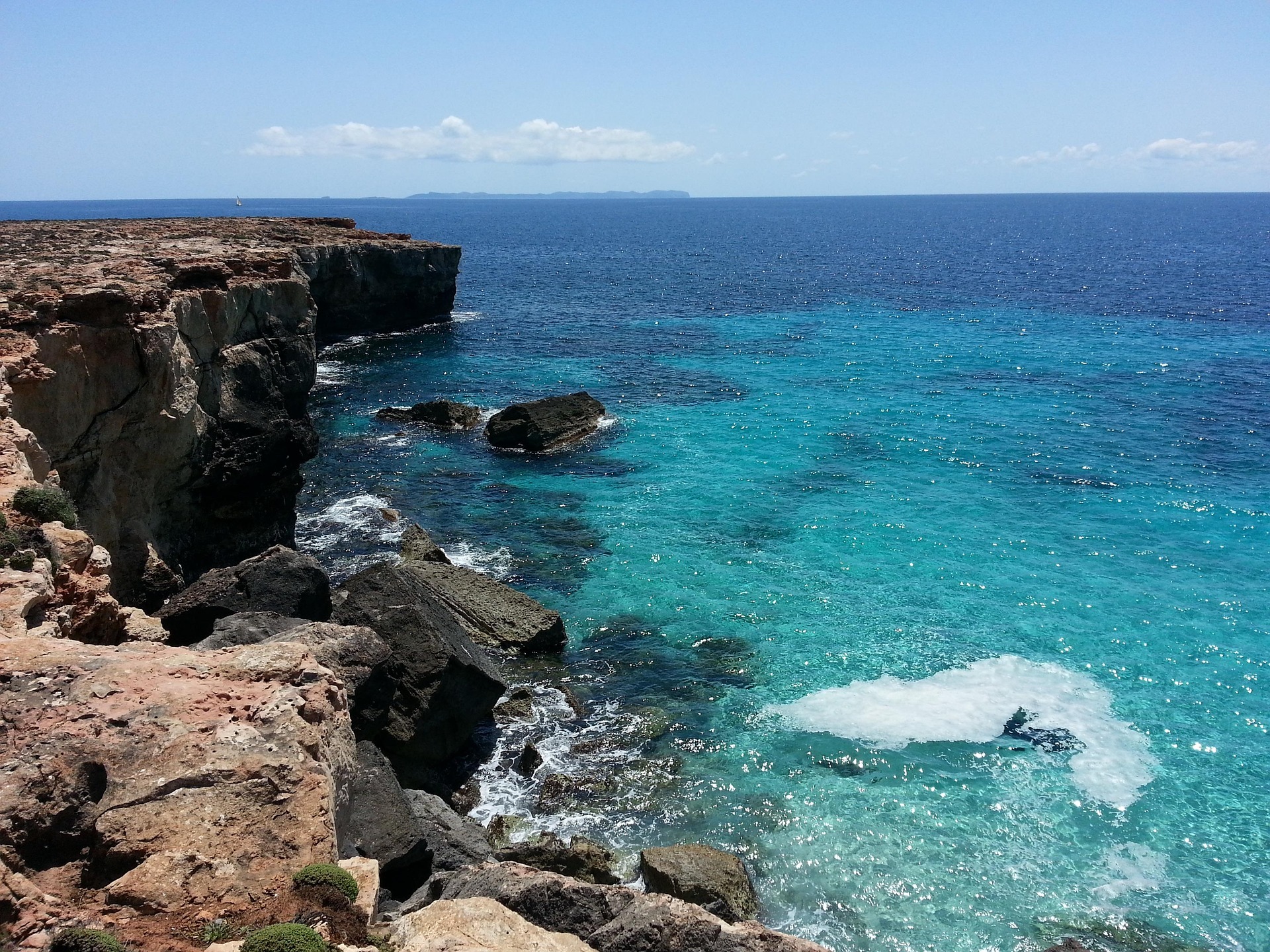
Day 3: Cross to Es Trenc and Colònia de Sant Jordi — sandy, shallow bays that are some of the most forgiving anchorages in the Balearics for a first-timer at the helm.
Days 4-5: Continue along the south coast toward Portocolom or back toward Palma, depending on how much of the week remains.
Day 6-7: Return to Palma, with a buffer day built in for weather or provisioning.
That's roughly 45-55 nautical miles across the week — short legs, calm water, and a fleet dense enough that help is never far away.
Cabrera National Park, created by Spanish law in 1991 and extended in 2019 to become the largest marine protected area in the western Mediterranean, spans 11 islands and requires all visiting boats to use pre-booked laid moorings rather than anchoring in the natural harbour (Wikipedia, Cabrera Archipelago Maritime-Terrestrial National Park, retrieved 2026-07-30). For first-timers, that rule is a feature, not a hassle — it keeps the anchorage calm and uncrowded.
For a full breakdown of what a week like this costs, our Rent a Boat in Spain: Complete Destination Guide covers Palma-based pricing, including the marina fees most booking pages don't show upfront.
2. Why Do Pollença & the Mallorca Northeast Suit a Longer First Trip?
If a week feels short for the south-coast loop, Mallorca's northeast corner around Pollença and Formentor gives first-timers a second base without leaving the same island — no extra ferry, no extra check-in.
The northeast trades sandy south-coast bays for dramatic cliffs and deeper anchorages around the Formentor peninsula. It's a slightly more demanding sail than the south coast — deeper water and less shelter mean a first-timer benefits from a skipper here more than on the flatter southern loop — but it stays well within reach for a bareboat crew with some experience.
What makes this route work for a first-timer extending their trip:
Same-island logistics: no new customs, provisioning, or check-in process — you're still working from the Palma-based fleet.
A genuinely different landscape: pine-covered cliffs and the Formentor lighthouse instead of flat sandy cays.
A natural pairing with the south coast: many first-week charterers do 4 days south, 3 days northeast, splitting the difference.
What first-timers say after combining both coasts: the most common comment from renters who do a south-then-north Mallorca week is that the contrast — sandy shallow anchorages one half of the week, dramatic cliffs the other — made the island feel far bigger than expected. Mallorca alone genuinely supports a full first-time itinerary without ever needing the ferry to Menorca or Ibiza.
3. Is Menorca's South Coast Calmer Than Ibiza and Formentera?
Menorca sits at the quieter end of the Balearic chain — UNESCO designated the entire island a Biosphere Reserve in October 1993 (Wikipedia, Menorca, retrieved 2026-07-30), and that protected status has kept development, and crowding, meaningfully lower than on Ibiza.
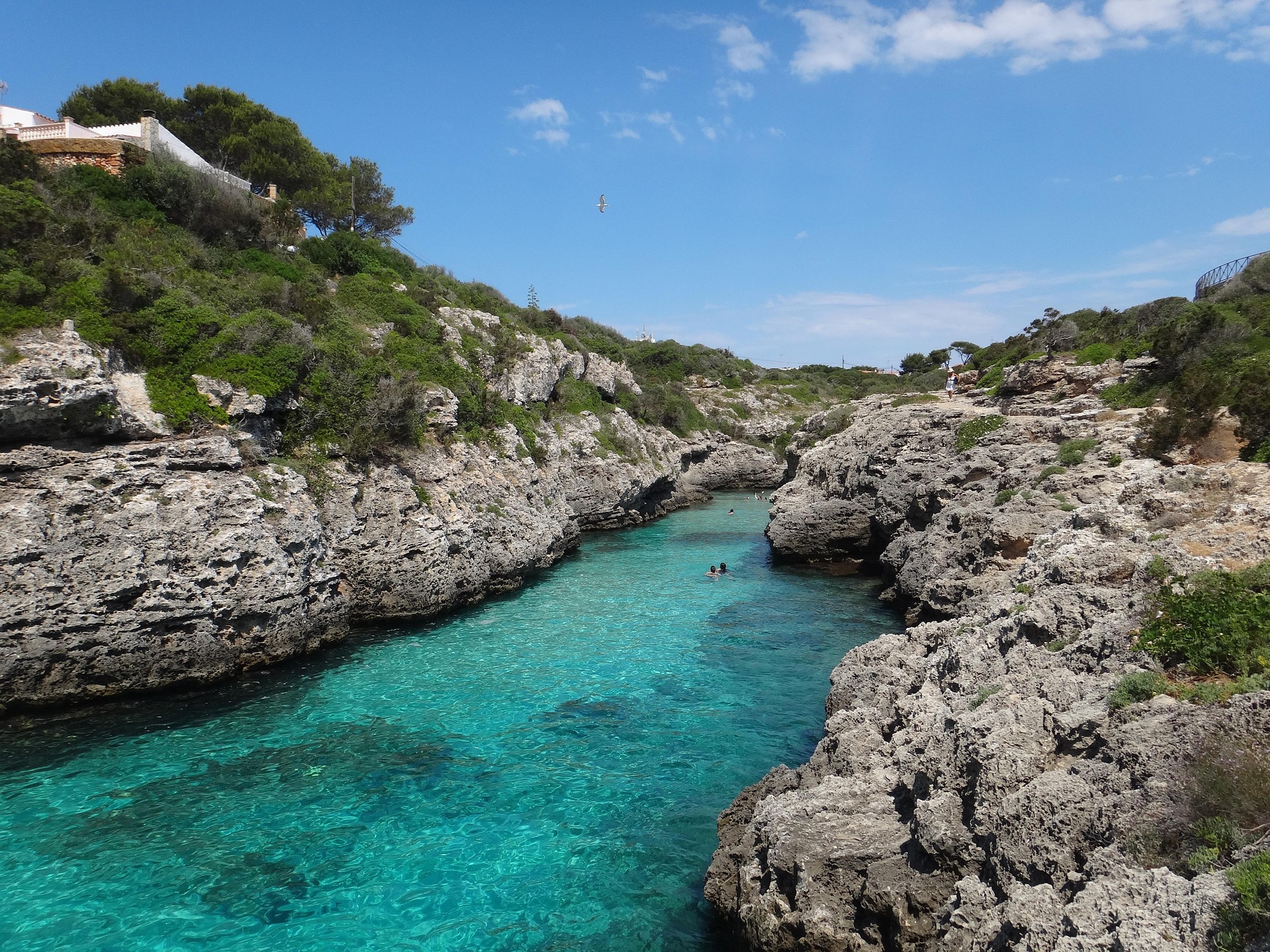
Menorca's south coast holds the archipelago's most photogenic calas — turquoise water, white sand, low cliffs — with roughly 30% lower crowds than the Ibiza-Formentera corridor (Boat4you, 2026). Mahón, the capital since 1722 thanks to its deep natural harbour, is the practical starting point; it has its own airport and a marina large enough to handle a full charter fleet.
Base
Best For
Nearby Highlights
Notes
Mahón
First-time base, direct flights
South coast calas, natural harbour
Menorca's own airport; no ferry needed
Ciutadella
Quieter western approach
Historic old town, western calas
Menorca's original capital until 1722
A typical first-timer route from Mahón runs along the south coast toward Cala en Turqueta and Cala Macarelleta, short hops of 6-12 nautical miles between anchorages — comparable in scale to Mallorca's south coast loop, just with fewer boats sharing the same water.
Menorca's UNESCO Biosphere Reserve status, granted in October 1993, has helped preserve a lower-density coastline than its Balearic neighbors while still supporting a full charter fleet from Mahón's protected natural harbour (Wikipedia, Menorca, retrieved 2026-07-30). For a first-timer who wants calm water without sacrificing marina infrastructure, that combination is hard to beat.
Menorca works especially well as a dedicated week rather than a stop tacked onto a Mallorca trip — the crossing from Palma is a genuine open-water passage, not a short hop, so most first-timers fly directly into Mahón instead.
4. Is Formentera a Good Base for a First-Timer, or Just a Stop?
Formentera is the postcard finish of any Balearic trip — clear water, sand-bottom anchorages, and a population of roughly 11,400 people spread across an island with no airport of its own (Wikipedia, Formentera, retrieved 2026-07-30). Every visitor arrives by boat, either their own charter or the 30-minute ferry from Ibiza.
That lack of infrastructure is exactly why Formentera works better as a stop than a standalone first-time base. The water south of Ibiza stretching toward Formentera hosts one of the most remarkable ecological features in the Mediterranean:
The oldest living thing most charterers never notice. A single clonal colony of Posidonia oceanica seagrass — discovered south of Ibiza in 2006 and stretching roughly 8 kilometers to Formentera — is estimated at around 100,000 years old, making it one of the largest and oldest living organisms on Earth (Wikipedia, Posidonia oceanica, retrieved 2026-07-30). Posidonia meadows also absorb roughly 15 times more CO2 per year than an equivalent area of Amazon rainforest, which is exactly why Spain protects them so aggressively.
That protection has real, practical consequences for a first-timer: overnight anchoring in Formentera's seagrass beds is now restricted, and paid mooring buoys are mandatory inside the marine reserves. Charterers who don't book ahead can find every legal mooring spot full by early afternoon.
For a first trip, the smarter pattern is what most experienced Balearic operators already recommend: pick up in Palma or Ibiza, and treat Formentera as day four or five of a longer week rather than the whole destination. That way, a full mooring buoy at Es Pujols or Cala Saona is a bonus, not a make-or-break booking.
5. Why Is Ibiza Less Beginner-Friendly Than Its Reputation Suggests?
Ibiza is the most famous name on this list, and the least practical as a standalone first-time base. Berths in Ibiza Town are limited, and turnover is intense in peak season — more charterers here default to hiring a skipper than in Croatia or Greece, partly because local knowledge of marina check-in procedures and posidonia-protected anchoring zones is worth the day rate even for a licensed sailor (Boat4you, 2026).
Skippered vs. bareboat in Ibiza: the single biggest complaint from first-timers who tried to bareboat Ibiza Town without a skipper wasn't the sailing — it was the mooring hunt. Arriving mid-afternoon with no reservation routinely means motoring past a full marina before finding space, if any exists at all.
Spain's licensing rules apply the same way here as anywhere in the country: license-free navigation is limited to vessels under 5 meters with engines under 15HP, within 2 nautical miles of shore, in daylight only (Charter Ibiza, 2026). Anything larger requires a PNB, PER, ICC, RYA Day Skipper, or equivalent qualification — or a skippered charter, which sidesteps the licensing question entirely and is what most first-time Ibiza visitors choose.
The upside: Ibiza's north coast, away from the harbor crush, has genuinely quiet coves and sea caves. Most experienced operators treat it as one strong day within a Mallorca-based week — arrive, explore the north coast, and move on — rather than a base to build a full itinerary around.
6. Is Costa Brava a Budget-Friendly Alternative in Spain?
Mainland Spain's Costa Brava — the rugged Catalan coastline running roughly from Blanes, 60 kilometers northeast of Barcelona, up to the French border (Wikipedia, Costa Brava, retrieved 2026-07-30) — is the option most first-timer guides skip entirely, usually because it doesn't have the postcard fame of Mallorca or Ibiza.
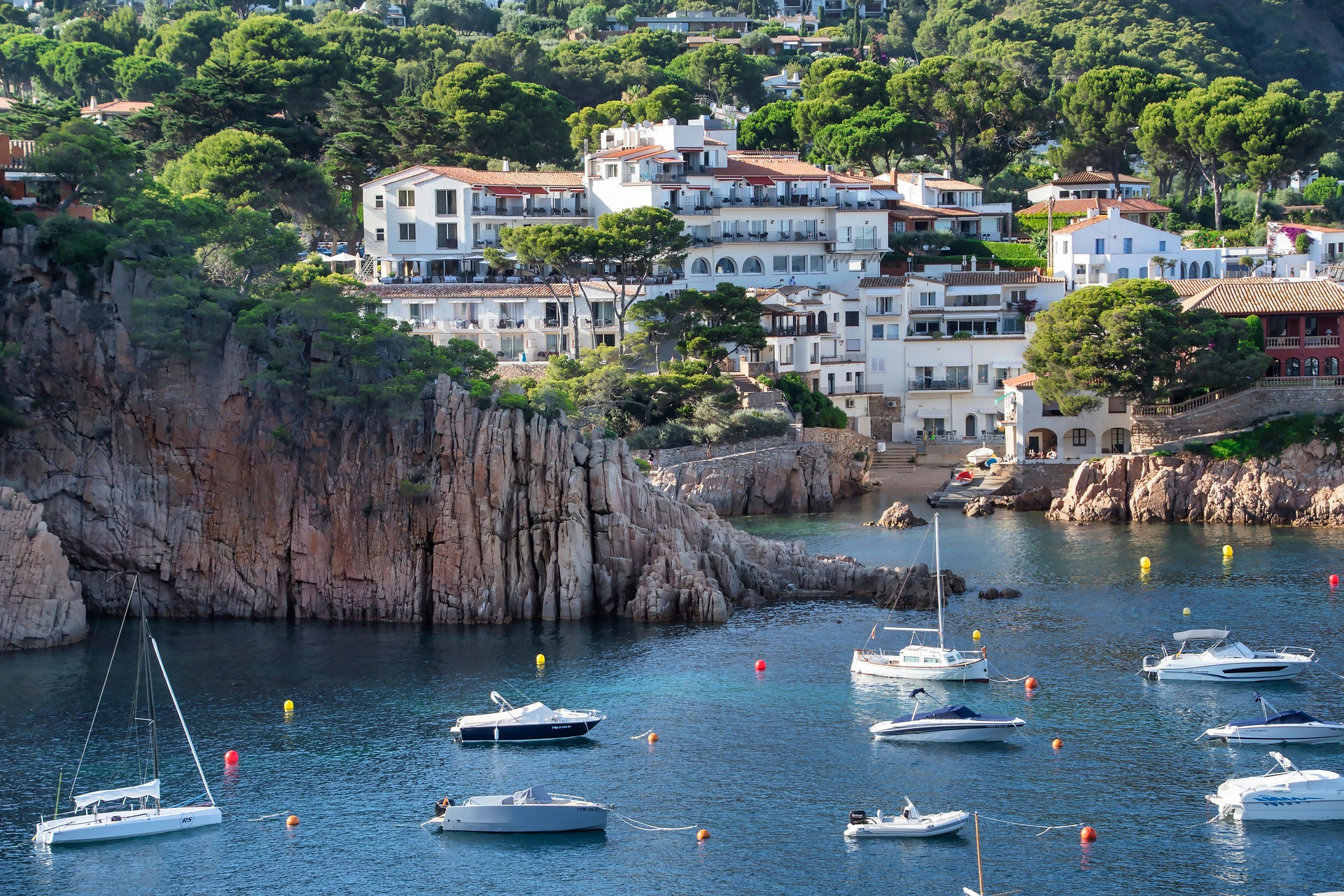
That's precisely the appeal for a budget-conscious first-timer. Costa Brava is quieter, cheaper, and rarely crowded compared to the Balearics, and its coastline includes the Medes Islands — Spain's first marine reserve, established off L'Estartit — for anyone who wants a protected-water anchorage without Balearic-level marina fees.
Costa Brava's coastline holds more than 30% protected natural area within Girona province alone, including the Medes Islands marine reserve — Spain's first — and the Cap de Creus Natural Park at the coast's northern tip (Wikipedia, Costa Brava, retrieved 2026-07-30). For a first-timer prioritizing budget over island-hopping glamour, that combination of protected water and mainland pricing is hard to find elsewhere in Spain.
A typical first-timer route runs short day-hops between Palamós, Begur, and L'Estartit — none of the multi-hour open-water crossings that define a Balearic island-hopping week, and provisioning is straightforward from any of the coastal towns along the way.
The trade-off is obvious: you lose the Balearic island-hopping structure entirely. For a first-timer whose priority is calm, cheap, short-hop sailing rather than checking off famous islands, Costa Brava is a legitimate — and underrated — starting point.
How Do You Choose the Right Base as a First-Timer?
Three questions narrow this down quickly.
How much sailing experience do you have? If you're bareboating with little or no experience, Palma and the Mallorca south coast are the safest choice — the densest fleet, the shortest passages, and the most forgiving anchorages in the country. If you're hiring a skipper regardless, Menorca, Ibiza, and the Mallorca northeast all open up.
How long is your trip? A full week favors Mallorca on its own — the south coast and the Formentor northeast genuinely fill seven days without a single open-water crossing to another island. A shorter trip (4-5 days) is well served by Costa Brava, where short hops between mainland towns don't require the buffer days a Balearic itinerary needs.
What's your budget? The Balearics carry a real cost premium — a 45-foot catamaran from Palma runs €13,000-€18,000 a week in peak season, roughly double the equivalent boat in Croatia (Boat4you, 2026). Costa Brava and Menorca both undercut Palma and Ibiza on marina fees and provisioning. See our Spain destination guide for full worked cost examples, including the marina-night math most booking pages leave out, or read How Much Does It Cost to Charter a Boat in Spain? for the complete breakdown.
Source: Fleetohub analysis based on Boat4you and Click&Boat regional pricing data, indicative mid-season rates by Spanish departure base, 2025-2026.
What Fleetohub's fleet data shows about first-time bookings. Among first-time renters searching Spanish charters on Fleetohub, Palma and the Mallorca south coast account for the largest share of first-booking inquiries, with Costa Brava a growing second choice among budget-conscious searchers. Ibiza sees the highest search volume overall — driven by name recognition — but a meaningfully lower first-timer booking-through rate once beginners see the marina availability and skipper-fee math. (Fleetohub fleet data, 2026.)
If you'd rather compare Spain against the Adriatic or the Aegean before deciding which country to book, our best sailing spots in Croatia and best sailing spots in Greece cover the equivalent shortlists for those destinations — and our complete Spain destination guide breaks down every region, port, and boat type in depth.
For a broader sense of what a first week on any charter actually involves — daily rhythm, what to pack, how anchoring works — read what to expect on your first sailing holiday before you book.
Frequently Asked Questions
Which Spanish destination is best for a first-time sailor?
Palma de Mallorca, and specifically the south coast toward Cabrera and Es Trenc. It has the largest charter fleet in the western Mediterranean, an airport 15 minutes from most marinas, and a week-long loop of short, sheltered passages (10-20 nautical miles) that never leaves Mallorca's waters.
Do I need a sailing license to rent a boat in Spain?
Not for a skippered charter — the professional skipper's qualification covers the boat. For a bareboat charter, Spain recognizes the PNB (up to 8m), PER (up to 15m), ICC, and RYA Day Skipper, among other equivalents. Vessels under 5 meters with engines under 15HP can be operated license-free within 2 nautical miles of shore, in daylight.
Is Ibiza a good base for a first-time charter?
Not as a standalone base. Berths in Ibiza Town are limited and turnover is intense in peak season, and more charterers here hire a skipper than anywhere else in Spain because of it. Most experienced operators treat Ibiza as one strong day within a Mallorca-based week rather than a full itinerary on its own.
What's the biggest planning mistake first-timers make in Spain?
Underestimating protected-area mooring rules. Cabrera National Park and Formentera's seagrass beds require pre-booked mooring buoys rather than free anchoring, and anchoring on protected posidonia carries fines of €100-€500. Booking marina nights and mooring buoys before you obsess over the boat spec sheet avoids the most common first-week headache.
What's the best time of year for a first Spanish sailing trip?
September. Water holds around 25°C, families with school-age kids have gone home, and marina prices drop well below the July-August peak, when rates run 50-80% higher for the same boat. May and June are also strong shoulder-season choices with lighter crowds and lower prices than peak summer.
Start With Mallorca, Then Explore
Spain's charter market genuinely rewards a first-timer who starts with Palma and the Mallorca south coast — the densest fleet, the shortest passages, and anchorages forgiving enough to build confidence before anything more ambitious. Menorca and the Mallorca northeast widen your choices without adding much difficulty. Costa Brava is the budget-conscious mainland alternative most guides skip. Formentera is absolutely worth seeing — just as a stop within a longer week, not a standalone base. And Ibiza, for all its fame, is best treated as one memorable day rather than the whole itinerary.
The single biggest mistake first-time renters make in Spain isn't picking the wrong island. It's booking a peak-season Ibiza week without a marina reservation, and discovering on arrival day that fame doesn't guarantee a berth.
Information accurate as of July 2026. Verify all prices and availability with your charter operator before booking.