Catamaran vs Sailboat: Which Suits a Beginner Charter? | FleetoHub
Fleetohub Editorial Team·
Catamaran vs Sailboat: Which Suits a Beginner Charter?
Open any charter site and you'll hit the same choice within seconds: catamaran or sailboat? Both look great in the photos. Neither listing tells you which one suits someone who has never spent more than an afternoon on a boat.
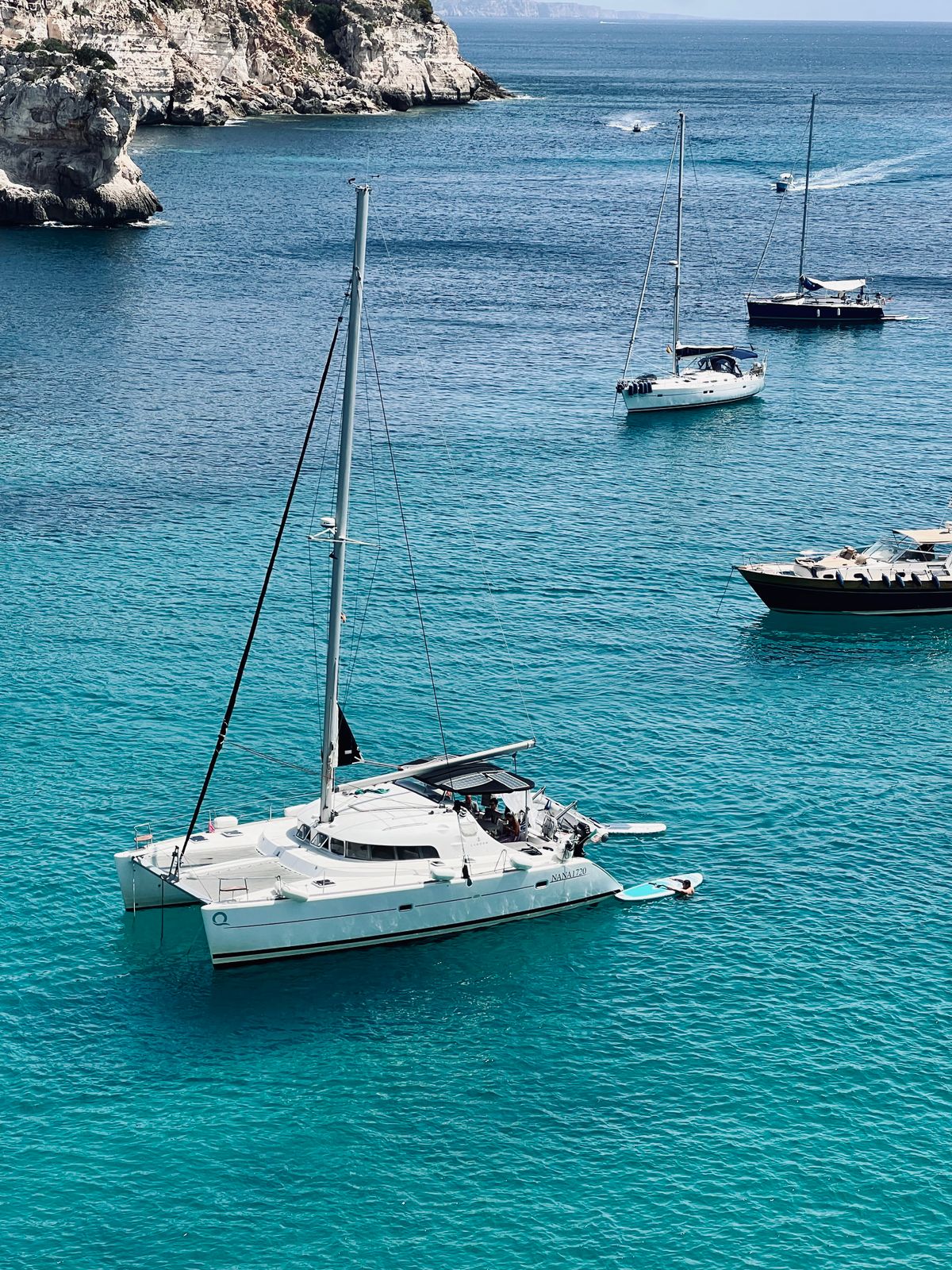
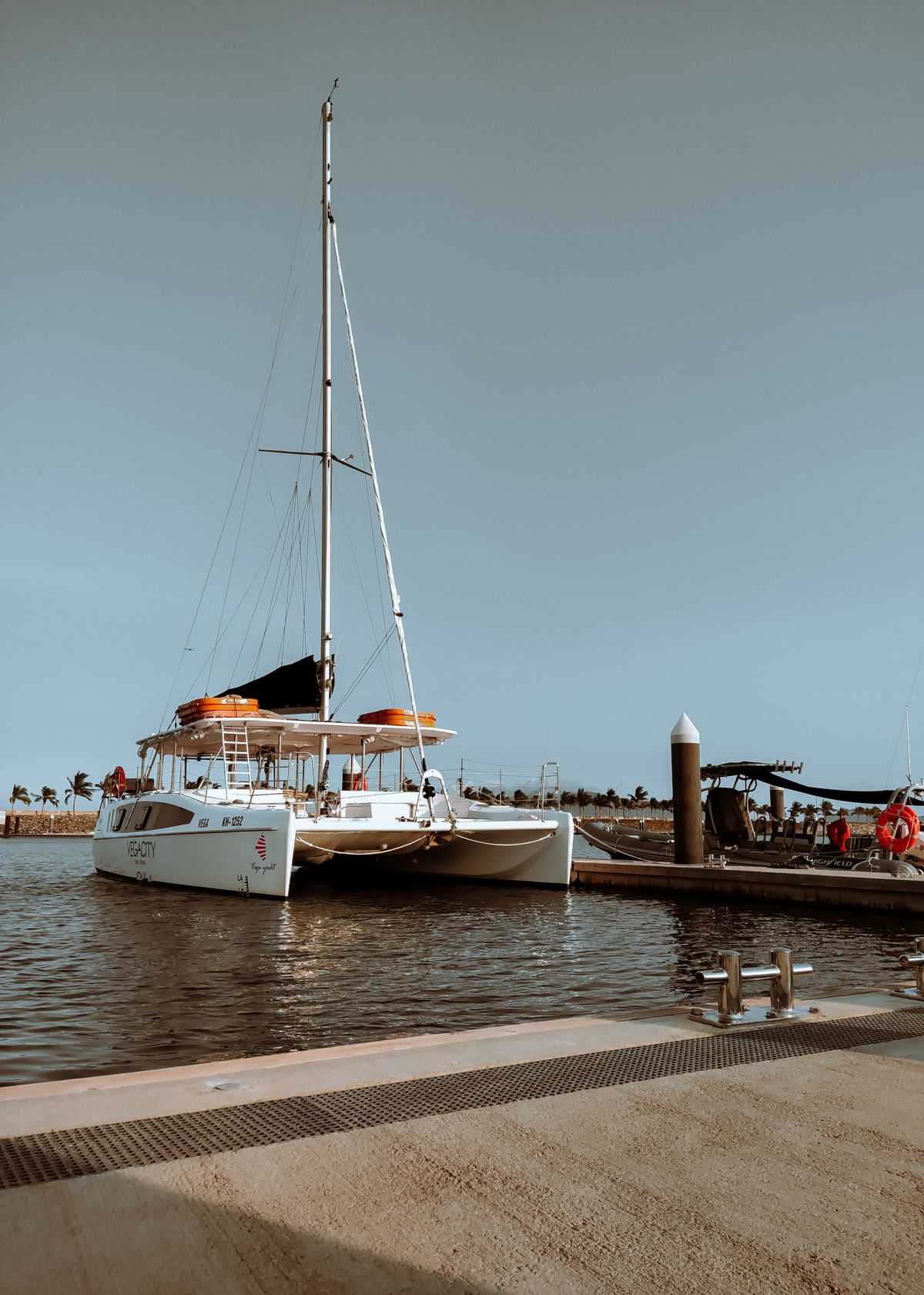
A quick glossary first. In this guide, "sailboat" means a monohull, a boat with a single hull. A catamaran has two hulls joined by a deck. Think of a monohull as a bicycle that leans into every turn, and a catamaran as a wide table on two legs that stays level.
We compare them on the five things beginners care about most: steadiness, space, handling, sailing feel, and cost. If you're choosing for a family, our guide to what kind of boat to rent for a family trip goes deeper on kids and ages.
Key Takeaways
Catamarans win on steadiness and space: they sail flat and give a group separate cabins
Monohulls win on price and sailing feel: for six guests, a catamaran costs about 59% more per person in 2026 (Fleetohub calculation)
Seasick-prone or travelling with young kids? Pick the catamaran
Tight budget, or want to learn to sail? Pick the monohull
Booking with a skipper? Handling matters less, so decide on comfort and cost
Catamaran vs Sailboat: What Are the Real Differences?
In 2025, catamarans made up 26% of the global charter fleet, according to Booking Manager's , so you'll find both types in almost every marina. For a first-timer the short answer is simple. Choose a catamaran for comfort and space, and a monohull for value and a more hands-on sailing feel.
State of the Yacht Charter Market 2025
Share of the global charter fleet that is catamarans. Source: Booking Manager, 2025.
Here's how the two compare at a glance:
Catamaran
Monohull sailboat
Best for
Families, groups, seasick-prone guests
Couples, small crews, tight budgets
Steadiness
Sails flat; barely rocks at anchor
Leans (heels) under sail; rolls at anchor
Space
Wide deck, big shared lounge, cabins in two hulls
Narrower deck, cabins share one hull
Typical guests (38–46ft)
6–10
4–8
Sailing feel
Fast on a reach; weaker upwind
Responsive; stronger upwind
Docking
Easy with two engines, but very wide
Harder with one engine, but fits more berths
Base weekly rate, high season 2026
€4,800–€12,500
€2,700–€6,000
Rates are Fleetohub's synthesis of published Croatia and Greece high-season prices for 38–46ft boats, before skipper, taxes, and marina fees. Capacities vary by layout, so confirm cabin and berth counts with the operator.
Which Is Steadier for a First-Timer?
The catamaran wins on steadiness. In 2025, NauticEd's sailing education team wrote that at anchor, catamarans "don't roll side-to-side in the swell the way monos do" (NauticEd, Catamaran vs Monohull: A Real-World Comparison for Cruisers, retrieved October 2026). They also sail flatter underway. For a beginner, that means drinks stay on the table and nobody slides across the deck.
A monohull does the opposite, and on purpose. It heels, which just means it leans over as wind fills the sails. Heeling feels dramatic on day one, but it's normal. NauticEd notes that it "tells you when you're overpowered and need to reef", meaning shorten the sails. NauticEd also confirms that monohulls are self-righting, so they come back upright.
The catch is how that lean feels to someone nervous. A tilted deck can unsettle a first-timer even when it's perfectly safe. If you've never sailed, ask yourself how you'd feel with the floor tilted for hours.
Steadiness is also the one factor you can't fix once you're aboard. You can save money by sailing in June instead of July. You can't make a monohull stop rolling at anchor. That's why we weigh it first.
In 2025, NauticEd's sailing education team described catamarans as flatter under sail and steadier at anchor, where they "don't roll side-to-side in the swell the way monos do". Monohulls heel when sailing, which signals when to shorten sail but can unsettle first-time guests. (NauticEd, Catamaran vs Monohull: A Real-World Comparison for Cruisers, retrieved October 2026.)
Prone to queasiness? Our seasickness guide explains why a flatter boat helps, and what else to do about it.
This boat is right for you if: you or a travel partner get motion sick, you're bringing young children, or you want a floating holiday rental rather than a sporting challenge.
Verdict: catamaran wins for steadiness.
Which Has More Space and Privacy?
The catamaran wins again, and by a wide margin. As of October 2026, Sunsail's guest account of its 44-foot catamaran says the two guests "effectively had a hull each" (Sunsail, Catamaran vs. Monohull, Helena Lucas MBE, retrieved October 2026). The boat offered "enough sleeping accommodation for 4 couples". The two hulls act like two separate wings of a small apartment.
The big shared lounge matters just as much. Everyone can sit together in the shade, out of the sun, at the same eye level as the water. NauticEd puts it plainly: "living aboard a catamaran is just more comfortable."
A monohull packs everything into one hull. The cabins sit along a single narrow corridor, so privacy is thinner. NauticEd adds that the cabin "can feel like a cave" without a deck salon, a lounge raised to deck level with big windows. Monohulls can feel roomy underneath, but they offer less open space on deck.
One warning when comparing listings: boat length doesn't tell you the cabin count. Two boats of similar size "can accommodate very different numbers of guests", says My Croatia Yacht Charter (Croatia Catamaran Charter Costs, 2025). Always confirm the real layout before you book.
As of October 2026, a Sunsail guest account of a 44-foot catamaran says two guests effectively had a hull each, with enough sleeping accommodation for four couples. Monohulls pack every cabin into a single hull, which gives less privacy and less open deck space. Always check the actual cabin count, not just the boat length. (Sunsail, Catamaran vs. Monohull; My Croatia Yacht Charter, 2025.)
This boat is right for you if: you're travelling with two or more couples, or three generations, and everyone wants a door to close.
Verdict: catamaran wins for space and privacy.
Which Is Easier to Handle?
It depends on whether you hire a skipper, meaning a professional captain. With one aboard, handling is their job, not yours. In 2025, skippered charters made up 21% of all Greek departures (Booking Manager / Globesailor, 2025), and most first-timers choose that route. Our bareboat, skippered, or crewed charter guide explains the trade-offs.
If you do sail bareboat, meaning without crew, the catamaran is easier in tight spaces. NauticEd says docking "a cat in an end tie with two engines and that wide beam? Easy. Docking a monohull with a single screw and tight quarters? That takes skill." Sunsail's guest adds that with two engines you can "spin the boat in its own length."
There's a catch. Catamarans are wide, and marinas don't have unlimited wide berths. NauticEd warns that marinas have "limited end ties and charge more", while monohulls "can often slip into a spot at half the cost." That can mean more nights at anchor, which suits many beginners anyway.
Hull type doesn't change the licence rules. Whether you need a certificate depends on the charter type, not the number of hulls, as we explain in our country-by-country licence guide.
Verdict: catamaran wins for manoeuvring; monohull wins for fitting into marinas.
Which Is More Fun to Sail?
The monohull wins on sailing feel, even though catamarans can be faster. On a tight reach in 18 knots, a Sunsail guest hit 9 knots in a 44-foot catamaran. The boat "quickly caught and passed the monohulls" (Sunsail, Catamaran vs. Monohull, retrieved October 2026). A reach means the wind blows from the side, a fast and comfortable angle for most boats.
Turn toward the wind, though, and things change. The same guest found catamaran performance "inferior to a monohull" upwind and downwind. NauticEd agrees that most production catamarans "don't point well", meaning they can't sail as close to the wind, "and can feel sluggish" when beating upwind.
Monohulls are also better teachers. NauticEd says they are "more forgiving of mistakes, which makes them better teaching tools." Want to trim a sail and feel the boat respond? A monohull gives you that.
Notice what both accounts leave out. They compare sailing performance, not how much of your week you'll actually spend sailing. If your week is mostly swim stops, beach lunches, and sunset dinners at anchor, the sailing-feel advantage matters less than it looks on paper.
This boat is right for you if: you want hands-on sailing, you're comfortable with a lean, and you'd like to learn on a forgiving boat.
Verdict: monohull wins for sailing feel; catamaran wins on speed off the wind.
Which Costs Less?
The monohull costs less, and the gap is bigger than most first-timers expect. In 2026, a 38–45ft monohull lists at about €2,700–€6,000 per week in high season across Croatia and Greece. A 38–46ft catamaran runs €4,800–€12,500 (My Croatia Yacht Charter, Croatia Catamaran Charter Costs; Nautilia Yachting, Greece Bareboat Charter Prices, 2025). Our full charter cost guide breaks down every extra.
Per person, the difference is clearer. Using the midpoint of each range, six guests on a 38–45ft monohull pay about €725 each. Six guests on a 38–42ft catamaran pay about €1,150 each, roughly 59% more.
Midpoint base weekly rate divided by guests. Bareboat, high season, before skipper, taxes, fuel, and marina fees. Source: Fleetohub calculation from My Croatia Yacht Charter and Nautilia Yachting, 2025.
A bigger catamaran doesn't close the gap. Eight guests on a 42–46ft catamaran still pay about €1,231 each, because the extra cabins raise the price as fast as they add people.
Marina fees can widen it further. Berths run €50–€250 a night in the Adriatic and Aegean. In Formentera or Ibiza Town they run €200–€500, and wider boats can pay more. Plan a few free nights at anchor to offset that.
There's a demand signal too. In 2025, monohull occupancy at peak season slightly exceeded catamaran occupancy for the first time in several years (Booking Manager, 2025). Our Greece destination guide covers which models dominate there.
In 2026, a 38–45ft monohull lists at roughly €2,700–€6,000 per week in high season across Croatia and Greece, versus €4,800–€12,500 for a 38–46ft catamaran. For six guests, that works out to about €725 per person on the monohull and €1,150 on a 38–42ft catamaran, around 59% more. (My Croatia Yacht Charter; Nautilia Yachting, 2025; Fleetohub calculation.)
You can narrow the gap by timing. Booking June or September instead of July or August cuts the base rate by 20–30% on the same boat (My Croatia Yacht Charter, Croatia Catamaran Charter Costs; Kavas Yachting, Greece Charter Price List, 2025). Prices vary by operator, date, and inclusions, so compare itemised quotes.
Verdict: monohull wins on cost, at roughly 59% less per person for the same group size.
So Which One Should You Choose?
Use this table to match your situation to a boat:
Your situation
Best choice
Why
Anyone prone to seasickness
Catamaran
Sails flat, barely rocks at anchor
Young children aboard
Catamaran
Wide, level deck to move around on
Two or more couples sharing
Catamaran
A hull each means real privacy
Couple or four friends on a budget
Monohull
About 59% cheaper per person
You want to learn to sail
Monohull
More forgiving, more responsive
Mostly anchoring and swimming
Catamaran
Space and stability matter most at anchor
First charter, skippered, unsure
Either
The skipper handles the boat, so decide on comfort and cost
For a beginner, the radar chart below scores both boats on the five factors we've covered. The scores are editorial judgements, not measurements.
Editorial scores (1 = weak, 5 = strong) for a typical 40–45ft charter boat. They summarise the sources cited above and are not measured data.
If you're still choosing a destination, our first sailing holiday guide walks through what a typical week looks like on either boat.
Frequently Asked Questions
Is a catamaran safer than a sailboat for beginners?
Neither is inherently safer. NauticEd says you're "probably not going to flip your cruising catamaran", and that monohulls are self-righting. The real risks on both are dragging anchor, hitting a reef, and docking mishaps. Catamarans do add redundancy: two engines, two rudders, and two hulls. A good skipper matters more than hull count.
Do you get less seasick on a catamaran?
Often, yes. A catamaran sails flatter and rocks far less at anchor, which helps many first-timers. It's not a guarantee, because waves still move any boat. Take remedies before you sail, sit midships, and watch the horizon, as covered in our seasickness guide above.
Can a beginner charter a catamaran without a licence?
Yes, with a skipper. Skippered and crewed charters don't require a certificate from guests, because the skipper's credentials cover the boat. Bareboat charters require one in most popular destinations, whether you pick one hull or two. Check the destination rules in the licence guide linked above.
Is a catamaran worth the extra cost?
It depends on your group. For six guests, a 38–42ft catamaran costs about €1,150 per person against about €725 on a monohull, a gap of roughly 59% (Fleetohub calculation, 2026). It's worth paying if steadiness or private cabins are essential. If neither is, the monohull is better value.
How many people sleep on a catamaran versus a monohull?
Typical 38–46ft catamarans sleep 6–10 guests, often across four cabins, while monohulls of 38–45ft sleep 4–8. Layouts differ even at the same length. On crewed boats, crew may use a cabin, so confirm the guest cabin count before booking.
Final Verdict
Category
Winner
Steadiness
Catamaran
Space and privacy
Catamaran
Handling under engine
Catamaran
Fitting into marinas
Monohull
Sailing feel and learning
Monohull
Cost
Monohull
Best overall for most first-timers
Catamaran if budget allows, otherwise monohull
Choose a catamaran if comfort decides your holiday: a queasy guest, young kids, or two couples who want privacy. Choose a monohull if budget or hands-on sailing matters more. Neither is a compromise, and a skippered week on either is a great first charter.
Information on prices, capacities, and regulations in this article is accurate as of October 2026; verify with the operator before booking. Prices vary by operator, date, and inclusions.